Electric Vehicle Charging Infrastructure Germany: Current Trends and Future Prospects
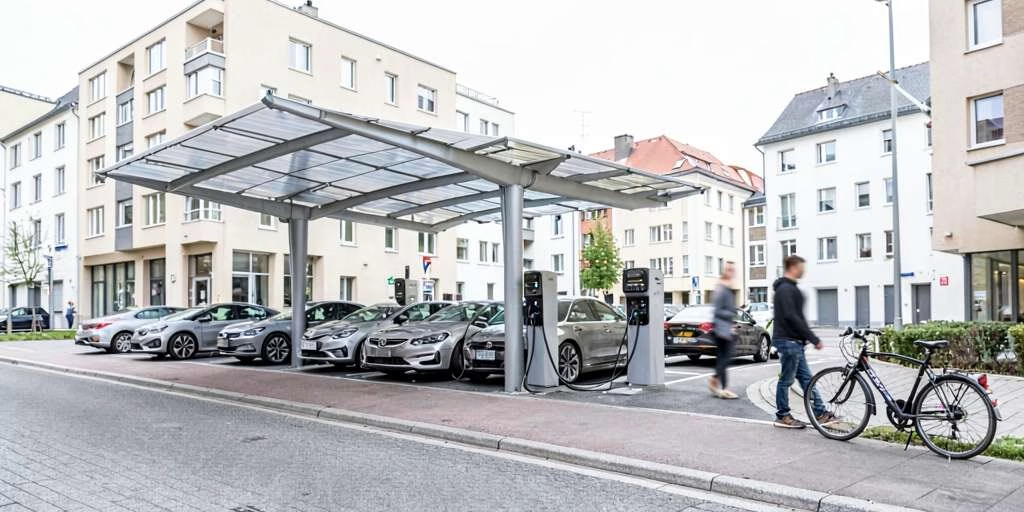
Germany is rapidly expanding its electric vehicle (EV) charging infrastructure to support the growing number of electric cars. This development involves increasing the number of public charging stations and ensuring their accessibility across various regions.
The article analyzes the current status of charging points, types of charging technologies, and the government's role in supporting infrastructure growth. It also addresses the challenges facing the sector and explores future trends in EV charging networks.
- Overview of Public Charging Infrastructure for Electric Vehicles in Germany
- Types of Charging Technologies Available in Germany
- Government Support and Policy Framework
- Expansion and Future Trends in Charging Networks
- User Experience and Accessibility
- Challenges Faced by the Charging Infrastructure Sector
- The Role of the Automotive Industry in Infrastructure Development
Overview of Public Charging Infrastructure for Electric Vehicles in Germany
The landscape of public charging infrastructure for electric vehicles in Germany is evolving rapidly, reflecting the country's commitment to sustainable mobility and green technology.
Current Status of Public Charging Stations
As of 2026, Germany boasts an extensive network of public charging stations catering to the growing demand for electric vehicles. The overall number of stations has significantly increased, ensuring that urban and rural areas alike have access to reliable charging options. The government and private sector continue to collaborate in expanding this infrastructure, aimed at supporting the ambitious goal of achieving climate neutrality.
Regional Distribution of Charging Points in Federal States
The distribution of charging points varies across Germany's federal states, with urban centers typically housing a higher concentration of charging stations.
Charging Infrastructure in Berlin and Brandenburg
Berlin leads the country in EV charging infrastructure, with numerous stations spread throughout the city. Brandenburg is enhancing its network, facilitating interconnection with Berlin to foster seamless mobility for EV users.
Developments in Mecklenburg and Schleswig Holstein
Mecklenburg and Schleswig Holstein are witnessing rapid development of their charging networks, bolstered by investments in renewable energy and government initiatives. These states aim to improve accessibility for both residents and visitors.
Charging Network in Saarland and North Rhine Westphalia
Saarland and North Rhine Westphalia are also progressing in expanding their charging facilities. Various partnerships have been established to bolster infrastructure expansion in both areas, addressing the unique regional challenges.
The Federal Network Agency’s Role in Infrastructure Expansion
The Federal Network Agency plays a pivotal role in overseeing the expansion of charging infrastructure. Its regulatory framework helps in standardizing installation procedures and ensuring effective implementation of charging networks, facilitating efficient electric mobility throughout the country.
Types of Charging Technologies Available in Germany
Germany offers a variety of electric vehicle charging technologies catering to different needs and speeds of charging.
Slow, Fast, and Rapid Charging Points
Charging stations in Germany are categorized into three main types based on their charging speed.
- Slow Charging Points: Typically found in residential areas, these are ideal for overnight charging with a power output of up to 3.7 kW.
- Fast Charging Points: With power outputs ranging from 11 kW to 22 kW, these stations are suitable for charging during short stops.
- Rapid Charging Points: Often located along motorways, these can provide 50 kW or more, allowing vehicles to charge significantly faster.
Characteristics of Fast Charging Infrastructure
The fast charging infrastructure is designed to minimize downtime for EV drivers. These stations utilize advanced technology to deliver higher power to vehicles, resulting in quicker recharging times. They often feature multiple charging sockets for various vehicle models.
Public Fast Charging Stations Accessibility
Access to public fast charging stations is strategically planned to ensure wide coverage across urban and rural areas. Many of these stations are located near amenities, offering convenience for users. Trends indicate ongoing expansion to meet the increasing demand for faster charging options.
Inductive Charging Innovations for Electric Cars
Inductive charging technology is an emerging method that allows vehicles to charge without the need for a physical connector. This innovation is gaining attention in Germany, especially for public transport and fleet vehicles, providing greater convenience and reducing wear on connectors.
Charging Power and Point Specifications
Charging power specifications vary by technology type. Clear standards help ensure compatibility across different vehicles and charging stations. This standardization facilitates smoother user experiences and paves the way for future expansions in the charging network.
Government Support and Policy Framework
The government plays a crucial role in advancing the electric vehicle charging infrastructure in Germany. This support comes through various initiatives, funding programs, and regulations aimed at establishing a robust network.
Federal Ministry Initiatives for Charging Infrastructure
The Federal Ministry for Digital and Transport is at the forefront of initiatives to enhance charging infrastructure. Their strategy includes:
- Development of comprehensive plans to increase the number of charging stations.
- Collaborations with local municipalities to facilitate the installation of public charging points.
- Support for innovation in charging technologies, particularly in urban areas.
National Funding Programs for Expansion
Various funding programs have been established to support the expansion of charging networks. These programs provide financial assistance for:
- Installation of new charging points across urban and rural areas.
- Upgrading existing infrastructure to improve efficiency and user experience.
- Research initiatives aimed at enhancing charging technology and accessibility.
Regulations Affecting Publicly Accessible Charging Stations
Regulatory frameworks have been introduced to ensure that publicly accessible charging stations meet specific standards. Key regulations include:
- Mandates for interoperability among different charging networks to facilitate seamless user access.
- Guidelines for the installation of charging stations to ensure safety and environmental compliance.
- Incentives for private operators to establish charging points in underserved areas.
Expansion and Future Trends in Charging Networks
The evolution of charging networks within Germany is essential for accommodating the growing electric vehicle market. Various strategies are being implemented to enhance the infrastructure significantly.
Planned Increase of Charging Points per Electric Car
Germany aims to substantially boost the number of charging stations to ensure that each electric vehicle has ample access to charging infrastructure. The goal is to achieve a ratio of:
- charging point for every 10 electric cars by 2025
- Expansion into urban areas to support dense populations
- Investment in rural locations to ensure widespread accessibility
Such initiatives indicate a robust commitment to evolving the electric mobility landscape in the country.
Integration with Renewable Energy Sources
Another significant trend is the integration of renewable energy into the charging infrastructure. This transition includes:
- Partnerships with renewable energy providers
- Implementation of solar-powered charging stations
- Smart grid technologies to optimize energy distribution
This shift not only supports sustainability goals but also enhances energy efficiency in the overall grid.
Temporary and Mobile Charging Solutions
As the demand for electric vehicles increases, innovative solutions are being developed, including:
- Mobile charging units for events and temporary locations
- Flexible charging solutions at construction sites or temporary work zones
- Deployment of pop-up charging stations during peak demand periods
These developments ensure that the charging network adapts to various circumstances and user needs.
User Experience and Accessibility
Enhancing user experience and ensuring accessibility are crucial aspects of the electric vehicle charging infrastructure in Germany.
Finding the Nearest Charging Station
Locating a nearby charging station is vital for electric vehicle users. Various resources help drivers easily identify accessible charging points throughout the country. High visibility signage on highways and urban areas directs users to charging stations. Furthermore, comprehensive mapping services with real-time updates on station availability are increasingly implemented.
Apps and Platforms for Locating Charging Points
Numerous mobile applications and online platforms offer tools designed to facilitate the search for charging infrastructure. These applications typically provide:
- Real-time availability of charging points
- Details on charging speeds and types
- User reviews and ratings for various locations
By utilizing these digital solutions, drivers can plan their routes effectively, minimizing downtime while searching for charging stations.
Accessibility of Charging Infrastructure for Electric Vehicles
Ensuring that charging stations are accessible to all users is a priority. This includes considerations for individuals with disabilities and those with different vehicle types. Efforts to improve accessibility are observed through:
- Designing charging stations with adequate space for wheelchair users
- Implementation of multilingual signage for diverse populations
- Creating designated parking areas near charging points
These initiatives contribute to a more inclusive experience for all electric vehicle drivers in Germany.
Challenges Faced by the Charging Infrastructure Sector
Several issues hinder the effective expansion and reliability of electric vehicle charging infrastructure in Germany. These challenges must be addressed to ensure a robust network.
Balancing Power Demand with Grid Capacity
The integration of a vast number of electric vehicle charging stations places significant stress on the existing power grid. As the demand for electricity increases with the growing adoption of electric vehicles, balancing this demand with grid capacity becomes crucial. Key considerations include:
- Peak load management to prevent system overloads.
- Investment in smart grid technologies for efficient energy distribution.
- Utilization of energy storage solutions to manage fluctuations.
Regional Disparities in Charging Station Availability
Accessibility of charging stations varies markedly across different regions in Germany. Urban areas typically see higher concentrations of charging points, whereas rural regions often lack adequate facilities. This disparity poses challenges for:
- Equitable access to charging infrastructure for all users.
- Incentivizing EV adoption in less populated areas.
- Fostering investments in underdeveloped regions.
Addressing Usage and Maintenance Issues
Challenges in maintaining and ensuring the usability of charging stations can hinder user experience. Frequent outages or malfunctioning equipment discourage potential users. Important aspects include:
- Regular maintenance schedules to minimize downtime.
- User-friendly reporting systems for malfunctioning stations.
- Clear communication from operators about station status.
The Role of the Automotive Industry in Infrastructure Development
The automotive industry is pivotal in transforming the EV charging landscape in Germany. Through collaboration and innovation, manufacturers are significantly contributing to the advancement of charging infrastructure.
Collaboration between Manufacturers and Charging Network Providers
Partnerships between car manufacturers and charging network operators are increasingly commonplace. Such collaborations enable a more integrated charging experience. Key elements include:
- Shared investments for expanding charging stations.
- Standardized charging protocols for compatibility across various electric vehicles.
- Joint marketing initiatives to promote accessibility to charging solutions.
Influence on Charging Technologies and Standards
The input from automotive manufacturers is crucial in shaping charging technologies. Innovations often arise from their research and development. Aspects to consider include:
- Adoption of fast and ultra-fast charging solutions to reduce downtime.
- Development of smart charging technologies that optimize energy consumption.
Impact on Electric Car Adoption Rates
The advances in charging infrastructure directly influence consumer acceptance of electric vehicles. As more charging stations become available, it alleviates range anxiety among potential buyers. Factors affecting adoption include:
- Enhanced convenience through urban and rural charging options.
- Clear communication of charging locations through user-friendly apps.
Leave a Reply