Green Hydrogen Regulations Europe 2026: Key Changes and Impacts
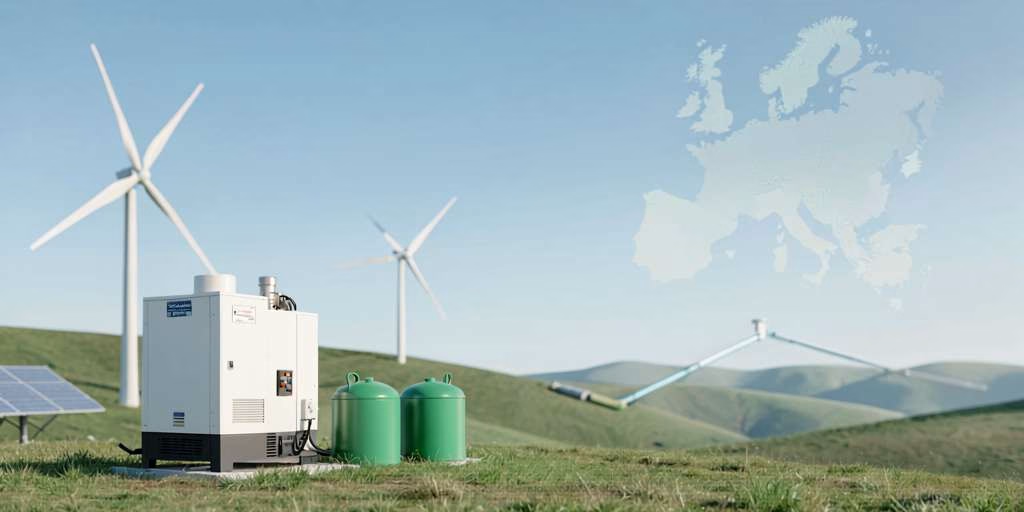
Green hydrogen regulations in Europe are evolving rapidly as the region aims for a sustainable energy future. By 2026, significant changes are expected to impact the production and use of renewable hydrogen.
The EU's regulatory framework aims to integrate hydrogen into the broader energy landscape. Key directives will establish targets and guidelines to ensure compliance with sustainability goals and promote the growth of the hydrogen market.
EU Regulatory Framework for Green Hydrogen
The regulatory landscape governing green hydrogen within the European Union is increasingly complex and pivotal for its integration into the energy mix. Below are the key elements that shape this framework.
Hydrogen and Decarbonised Gas Market Package
In 2024, the EU introduced the Hydrogen and Decarbonised Gas Market Package, aimed at establishing a comprehensive regulatory foundation for hydrogen production and distribution.
Directive (EU) 2024/1788 and Regulation (EU) 2024/1789
These instruments set forth principles governing the hydrogen market, ensuring that production and transport methods align with sustainability goals. They outline the framework for transparency and accountability in hydrogen supply chains.
Role of European Network Operators for Hydrogen (ENNOH)
ENNOH plays a crucial role in developing collaborative strategies among member states. Their focus lies on cross-border harmonization, ensuring efficient hydrogen network operations that facilitate trade and integration of resources.
Ten-Year Network Development Plans (TYNDP) and Cross-Border Trade
The TYNDP will be pivotal in outlining the infrastructure requirements to support the hydrogen economy. These plans aim to boost cross-border trade by establishing a network capable of efficient hydrogen transit.
Tariff Discounts and Market Incentives
Incentives such as tariff discounts are intended to stimulate investment in hydrogen infrastructure. These measures encourage stakeholders to engage actively in the emerging hydrogen market.
Renewable Energy Directive (RED III) and Binding Targets
As part of the EU's commitment to sustainable energy, the Renewable Energy Directive outlines binding targets for renewable hydrogen usage.
Renewable Fuels of Non-Biological Origin (RFNBOs) Criteria
The criteria delineate the prerequisites for renewable hydrogen to qualify as RFNBOs, mandating that production processes be closely linked to renewable energy sources.
Sub-targets for Transport Sector
Sub-targets specified within the RED III aim to promote the adoption of renewable hydrogen in the transportation sector, establishing benchmarks for growth.
Additionality and Temporal/Geographic Correlation Requirements
Regulations stipulate that hydrogen production must derive from new renewable energy installations, reinforcing the need for a direct correlation between generation and consumption.
Low-Carbon Hydrogen Delegated Act
This act is crucial for defining the classification of low-carbon hydrogen sources and their eligibility for market participation.
Emission Savings Thresholds and Certification
Hydrogen must achieve substantial greenhouse gas emission savings to be certified as low-carbon. These thresholds ensure that production methods contribute meaningfully to climate goals.
Impact on Hydrogen Production and Market Classification
The act’s provisions will influence market dynamics by establishing clear classifications and encouraging innovation in hydrogen technologies.
Development Phases and Strategic Roadmap
The phased approach to hydrogen development in Europe outlines a strategic pathway to achieve ambitious production and utilization goals by 2050. This roadmap is critical for ensuring the successful integration of green hydrogen into the energy landscape.
Phase 1 (2020–2024): Initial Electrolyser Installation and Production Targets
The initial phase has been focused on establishing the groundwork for renewable hydrogen production. A target has been set to install 6 GW of electrolyser capacity, aiming for an annual production of approximately 1 million tonnes of green hydrogen. This foundational period is essential for setting performance benchmarks and developing supply chains that will support future growth.
Phase 2 (2025–2030): Expansion of Capacity and Binding Industrial Uptake
As the EU transitions into Phase 2, ambitions escalate significantly. The target for electrolyser capacity increases to 40 GW, aligning with plans to produce 10 million tonnes of hydrogen. Notably, this phase introduces binding requirements for industrial uptake.
Industrial Uptake Requirements: 42% Renewable Hydrogen by 2030
By 2030, 42% of the hydrogen consumed in industrial processes must come from renewable sources, establishing a clear regulatory framework that encourages industries to shift toward sustainable practices. This requirement will spur investments in hydrogen technologies and infrastructure development.
Role of Transport and Energy Sectors in Phase 2
The transport and energy sectors play a pivotal role in this phase, as they are expected to increase their consumption of renewable hydrogen significantly. Public transport and freight systems are likely to be early adopters, encouraging broader market acceptance.
Phase 3 (2030–2050): Large-Scale Deployment and Market Integration
The final phase envisions a substantial expansion in the hydrogen economy. Targeting a hydrogen share of approximately 23% within the EU's overall energy mix by 2050, this phase focuses on large-scale deployments of infrastructure and technology.
Hydrogen’s Share in EU Energy Mix by 2050
By the year 2050, hydrogen is expected to become a major player in the energy landscape, fulfilling significant portions of energy demand across various sectors, thus reducing dependence on fossil fuels.
Long-term Market Stability and Growth
Strategies developed during this phase prioritize long-term stability. Robust market regulatory mechanisms and continuous stakeholder engagement are vital to sustain the growth trajectory and ensure successful integration of hydrogen networks across Europe.
Investment and Financial Support Mechanisms
Investment and financial support mechanisms play a crucial role in facilitating the development of the hydrogen economy across Europe. Various financial instruments and initiatives are in place to promote sustainable hydrogen production and infrastructure.
European Hydrogen Bank and Funding Instruments
The establishment of the European Hydrogen Bank marks a significant step in financing renewable hydrogen projects. This institution is vital in bridging the funding gap between clean hydrogen and fossil fuels.
Budget Allocation and Financial Bridging for Renewable Hydrogen
With an initial budget of €3 billion, the European Hydrogen Bank aims to allocate funds strategically to projects that demonstrate potential for high impact. This financial mechanism encourages the development of infrastructure essential for hydrogen production, distribution, and utilization.
Incentivising Clean Hydrogen Technology Adoption
By providing targeted financial incentives, the bank facilitates the adoption of innovative technologies in the hydrogen sector. Through subsidies and grants, projects that prioritize clean hydrogen development receive the necessary support to overcome initial investment barriers.
Important Projects of Common European Interest (IPCEI)
The IPCEI framework has allowed for the identification and support of critical hydrogen initiatives across Europe. These projects aim to enhance the hydrogen value chain and significantly impact the region's energy landscape.
IPCEI Hy2Tech: Innovation in Hydrogen Value Chain
This initiative focuses on advancing technology across all segments of the hydrogen value chain. By fostering innovation, IPCEI Hy2Tech seeks to enhance efficiencies and reduce costs associated with hydrogen production and usage.
Supporting Projects: Hy2Use, Hy2Infra, Hy2Move
- Hy2Use: A project dedicated to integrating hydrogen solutions into existing industries, ensuring effective utilization of renewable hydrogen.
- Hy2Infra: This initiative focuses on developing the necessary infrastructure, including pipelines and storage, to facilitate widespread hydrogen adoption.
- Hy2Move: A project aimed at promoting hydrogen use in the transport sector, supporting cleaner mobility solutions.
Public-Private Partnerships and Research Collaboration
Collaboration between public institutions and private entities is fundamental for advancing hydrogen technologies. Such partnerships leverage resources, expertise, and innovation to drive the hydrogen agenda forward.
The Clean Hydrogen Partnership and Horizon Europe Support
This partnership, supported by Horizon Europe, encourages collaborative research and technological advancements in the hydrogen sector. By pooling knowledge and resources, projects under this partnership aim to accelerate the deployment of hydrogen technologies.
Role of Hydrogen Valleys in Technology Development
Hydrogen Valleys represent integrated ecosystems that bring together hydrogen production, storage, and applications. These collaborative hubs foster innovation by creating synergies among various stakeholders, significantly advancing hydrogen technologies.
Market Regulation and Mechanisms
Effective market regulation is crucial to fostering growth in the hydrogen sector. Mechanisms evolving around hydrogen production, distribution, and consumption will shape the future landscape of the market.
Hydrogen Mechanism Implementation 2025
The Hydrogen Mechanism is set to be implemented in 2025, marking a significant step forward in shaping the hydrogen market. This innovative approach aims to align supply with demand effectively.
Balancing Supply and Demand in the Hydrogen Market
One of the core objectives of the Hydrogen Mechanism is to stabilize the market by balancing hydrogen supply and demand. By doing so, this mechanism will enhance market predictability, enabling stakeholders to make informed decisions regarding investments and operations.
Infrastructure Investment Guidance
Guidelines for infrastructure investment will be a principal focus, facilitating the development of essential hydrogen facilities. Clear directives will help navigate the complex landscape of hydrogen distribution networks and ensure that investments are directed toward projects with the greatest potential for impact.
Unbundling and Network Operation Rules
Unbundling principles are fundamental to ensuring a competitive market landscape in hydrogen production and distribution. These rules will enforce separation of roles and responsibilities in the hydrogen market.
Separation of Hydrogen Production and Network Operators
The unbundling of hydrogen production and network operations will be crucial for promoting fair competition. By decoupling these entities, market transparency will be increased, fostering an environment where independent operators can thrive.
Ensuring Fair Access and Market Transparency
To sustain market integrity, rules ensuring fair access to hydrogen networks will be vital. This approach will facilitate equitable conditions for all market participants, ultimately reducing barriers to entry and encouraging broader participation in the hydrogen economy.
Renewable Hydrogen Production and Integration
As renewable hydrogen gains momentum in Europe, its production and effective integration into the energy ecosystem have become critical. Innovations in technology and adherence to regulatory standards are essential for enhancing efficiency and market penetration.
Electrolyser Technology Development and Deployment
The advancement of electrolyser technologies is vital for increasing renewable hydrogen output. These systems convert electricity into hydrogen through electrolysis, and their efficiency directly influences hydrogen production rates.
Increasing Electrolysis Capacity and Efficiency
Innovations are focused on expanding electrolyser capacity to meet growing demands. Enhanced designs and materials are contributing to higher production efficiencies and lower operational costs. The transition to modular systems allows for scalability, catering to both small-scale and large-scale applications.
Integration with Renewable Energy Sources
Effective integration with renewable energy sources, such as wind and solar, is paramount for sustainable hydrogen production. Utilizing surplus renewable energy during peak generation times ensures that the hydrogen production process remains environmentally friendly and economically viable.
Ensuring Renewable Hydrogen Quality
Ensuring the quality of renewable hydrogen is crucial for its acceptance in various industrial applications. Compliance with stringent standards under the Renewable Energy Directive guarantees that produced hydrogen remains clean and sustainable.
Compliance with Renewable Energy Directive Standards
To maintain quality, hydrogen production must adhere to the established requirements under the Renewable Energy Directive. These guidelines ensure that the hydrogen produced qualifies as renewable and serves its intended purpose effectively in reducing carbon emissions.
Additionality Requirements and Carbon Accounting
Regulatory frameworks demand that hydrogen production not only utilizes renewable energy sources but also achieves additionality. This principle stipulates that new renewable installations must directly contribute to the hydrogen supply without undermining existing energy systems.
Sectoral Applications: Industrial and Transport
The applications of renewable hydrogen span various sectors, with significant benefits anticipated in both industrial and transportation industries. Adoption in these sectors is expected to accelerate the transition toward a low-carbon economy.
Requirements for Industrial Hydrogen Usage
Industries utilizing hydrogen must meet specific requirements to ensure a substantial supply of renewable hydrogen. These prerequisites are designed to encourage a gradual shift away from fossil fuels and adopt greener alternatives in manufacturing processes.
Promotion of Renewable Hydrogen in Transport Fuels
In the transport sector, renewable hydrogen is viewed as an innovative solution to decarbonize vehicles. The promotion of hydrogen fuel cells in public and commercial transport networks exemplifies the commitment to achieving significant emissions reductions in this critical area.
Challenges in Regulatory Implementation
The path toward effective implementation of green hydrogen regulations is fraught with challenges that could hinder progress. It is essential to address these issues to foster a robust hydrogen market across Europe.
Regulatory Uncertainty and Stakeholder Concerns
The evolving landscape of hydrogen regulations has led to a degree of uncertainty among stakeholders. This is primarily due to the frequent updates and revisions that are proposed by various parties, which complicates compliance for businesses and investors alike.
Calls for Revisions in RFNBO Criteria
Specifically, the Renewable Fuels of Non-Biological Origin (RFNBO) criteria are under scrutiny. Industry representatives often call for clearer, more stable guidelines to facilitate adherence and investment. The lack of uniformity in these criteria can create confusion, leading to a reticence among stakeholders to commit to long-term projects.
Impact on Investment Confidence and Market Development
Consequently, regulatory ambiguity can significantly affect investment confidence. Investors might hesitate to allocate resources to hydrogen initiatives, fearing that future regulations could negatively impact projected returns. This, in turn, stymies market development and the overall growth of a sustainable hydrogen economy in Europe.
Coordination Among Member States
Effective coordination among EU member states is critical for the success of hydrogen regulations. Without cohesive efforts, the implementation of policies can become disjointed, leading to inefficiencies.
Harmonising National and EU-Level Policies
Significant variations in national policies can impede the growth of the hydrogen market. Harmonizing regulations at both national and EU levels is essential to ensure that all countries are working towards common goals. Such alignment would simplify compliance processes for businesses operating in multiple jurisdictions.
Managing Cross-Border Network Development
Additionally, the development of cross-border hydrogen networks requires careful management among member states. Disputes over regulatory compliance and resource allocation can lead to delays in critical infrastructure projects. A collaborative approach is necessary to facilitate seamless integration of hydrogen networks across borders.
Future Outlook for European Hydrogen Market
The European hydrogen market is positioned for significant transformations as it evolves in response to regulatory advancements and technological innovations. The anticipated developments will shape its trajectory, offering new opportunities as well as challenges to stakeholders across various sectors.
Expected Revisions to Hydrogen Strategy in 2026
Revisions to the hydrogen strategy are projected to take place in 2026, reflecting an ongoing commitment to climate goals. This phase will include extensive public consultations that aim to gather insights from industry players, policymakers, and civil society.
Public Consultations and Policy Adjustments
Public consultations are crucial for aligning interests and fostering collaboration among EU member states. Feedback on existing regulations may lead to policy adjustments, ensuring that they remain relevant and effective in achieving long-term sustainability goals.
Integration with the EU Green Deal Ambitions
Integrating hydrogen production and use into the broader EU Green Deal framework is imperative. This alignment will enhance synergies between the hydrogen sector and other sectors, driving comprehensive climate action across Europe.
Innovation and Technology Trends
Technological advancement and innovation are pivotal for the future of hydrogen. Continuous research and development are expected to optimize hydrogen production processes and expand applications across sectors.
Emerging Hydrogen Technologies and Fuel Cell Development
Emerging technologies promise to enhance efficiency in hydrogen production methods, such as advancements in electrolysis and fuel cell designs. The adoption of these innovations can support sustainable energy transitions in multiple sectors.
Role of Clean Hydrogen Partnerships in Advancing Research
Clean Hydrogen Partnerships will play an essential role in advancing research and facilitating knowledge transfer between academia and industry. Collaborative efforts focus on streamlining development processes for emerging hydrogen technologies.
Enhancing Market Support and Infrastructure
The growth of the hydrogen market is contingent upon robust infrastructure and appropriate market support mechanisms. Investment in infrastructure is crucial for ensuring the successful rollout of hydrogen technologies.
Expanding European Hydrogen Network and Terminals
There is a critical need for the expansion of the European hydrogen network and associated terminals. This expansion is necessary to accommodate increased hydrogen production and facilitate cross-border trade.
Supporting Market Uptake Through Regulation and Finance
Regulatory measures and financial support will be essential in promoting market uptake. Incentives for hydrogen production and infrastructure development can stimulate investment and drive the adoption of renewable hydrogen solutions across Europe.
Leave a Reply