Solar panels EU compliance: Regulations and Requirements for Germany
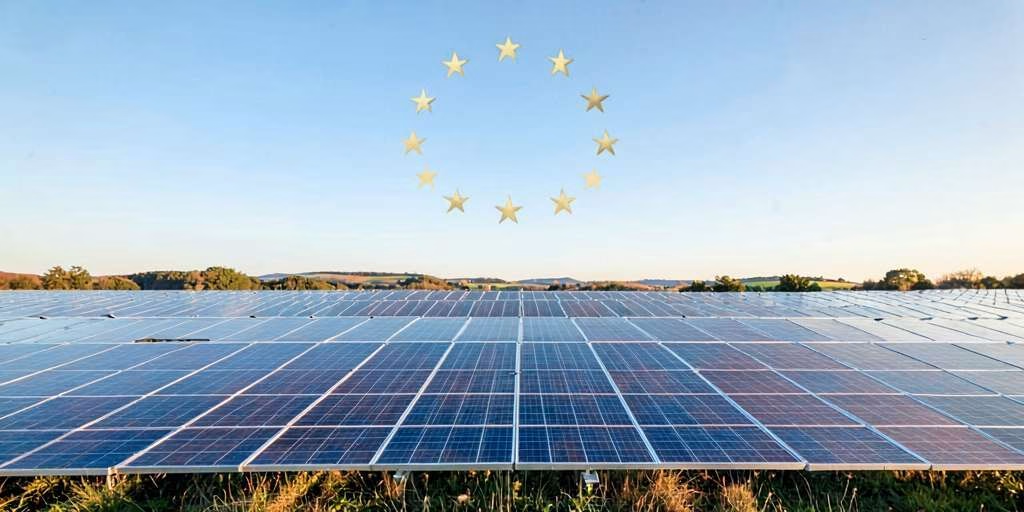
The adoption of solar panels in the European Union is governed by a comprehensive regulatory framework. Compliance with these regulations is essential for ensuring safety, efficiency, and sustainability in solar installations.
This article provides an overview of the key regulations, technical requirements, and design criteria for solar panels in the EU. It also addresses compliance processes for installers and building owners, highlighting the challenges and benefits of meeting these requirements.
- European Union Regulatory Framework for Solar Installations
- Technical Requirements for Solar Panels in the European Union
- Design and Installation Criteria for Solar Panels on Buildings
- Compliance Processes for Installers and Owners
- Challenges and Benefits of Meeting Solar Panel Regulatory Requirements
European Union Regulatory Framework for Solar Installations
The regulatory landscape governing solar installations within the European Union is structured to foster a transition towards renewable energy. This framework is designed to ensure that solar technologies are implemented safely and effectively across member states. Compliance with these regulations is a crucial aspect for all stakeholders involved in the installation and operation of solar panels.
Several significant directives form the foundation of this regulatory framework:
- Energy Performance of Buildings Directive (EPBD): Aimed at increasing the energy efficiency of buildings, this directive mandates that all new constructions optimize for solar energy generation. It requires that building designs facilitate solar panel installation and that all new buildings constructed from 2026 onwards meet its standards.
- EU Solar Strategy: Introduced to achieve a target of 700 GW of solar photovoltaic capacity by 2030, this strategy emphasizes the need for a substantial increase in solar energy deployment. Alongside economic growth, the aim is to enhance energy independence and reduce carbon emissions.
To maintain the progress outlined in these strategies, it is essential for countries within the EU to develop specific national legislation that aligns with these directives. Each member state interprets and implements these regulations according to its unique circumstances, which can lead to a diverse array of practices across the EU.
Countries such as Germany have made notable strides by adopting regulations like the "Solarpaket," which simplifies procedures for solar panel installation and enhances legal frameworks surrounding renewable energy. As countries work towards fulfilling EU mandates, local interpretations often present both challenges and opportunities for developers and installers.
Furthermore, these regulations also address safety and performance standards for solar technologies. Compliance with directives such as the Low Voltage Directive (LVD) and the General Product Safety Regulation ensures that solar panels meet essential safety and efficiency criteria. This aids in protecting consumers and enhancing the overall reliability of solar energy systems.
In summary, the European Union's framework for solar installations is pivotal in guiding the transition towards renewable energy. The blend of strict regulations and strategic initiatives lays a solid groundwork for sustainable energy development, ultimately contributing to the EU's environmental goals and commitments.
Technical Requirements for Solar Panels in the European Union
Compliance with technical requirements for solar panels is essential to ensure safety, efficiency, and reliability in energy generation. These regulations are designed to protect both consumers and the environment while fostering the growth of the renewable energy sector.
Safety Standards
One of the primary focuses of the technical requirements is the safety of solar panels. Adhering to these safety standards minimizes risks associated with the installation and operation of solar energy systems. Key safety criteria include:
- Mechanical Resistance: Panels must withstand external stresses, such as wind, hail, and snow loads.
- Electrical Safety: Compliance with electrical safety standards ensures the risk of electric shock or fire is minimized.
- Quality Marking: Panels are required to be labeled with safety certifications, indicating compliance with relevant EU regulations.
Performance Standards
The performance standards dictate the efficiency and output of solar panels. These guidelines ensure that the panels operate at optimal levels, contributing to energy production goals. Important aspects include:
- Energy Efficiency Ratings: Panels are rated based on their efficiency in converting sunlight into electricity.
- Durability Testing: Panels undergo rigorous testing to confirm their longevity and functionality over time.
- Guarantee Periods: Manufacturers are often required to provide warranties, ensuring the panels will perform as promised for a specified time frame.
Compatibility and Integration
Solar panels need to be compatible with other components of the solar energy system, such as inverters and batteries. Technical requirements specify that products must adhere to standardized interfaces to facilitate seamless integration. These requirements include:
- Standardized Connections: Connections between panels and other system components must meet defined specifications.
- Compatibility with Various Systems: Panels should be adaptable to both grid-tied and off-grid applications.
- Regulations on Energy Management: Compliance with energy management standards is crucial for efficient operation and monitoring of the solar energy system.
Environmental Considerations
Technical requirements extend beyond performance and safety, addressing environmental impacts associated with solar panel production and disposal. These considerations include:
- Recyclability: Manufacturers are encouraged to design panels that can be efficiently recycled at the end of their life cycle.
- Use of Sustainable Materials: Prioritizing materials that minimize environmental harm during production is essential.
- Reduction of Carbon Footprint: The carbon emissions associated with the manufacturing process should be monitored and minimized.
In summary, the technical requirements for solar panels in the European Union cover multiple aspects crucial for ensuring safety, performance, and environmental responsibility. These standards support the transition toward renewable energy while safeguarding consumer interests and promoting industry growth.
Design and Installation Criteria for Solar Panels on Buildings
The design and installation of solar panels on buildings in the European Union must adhere to a comprehensive set of criteria aimed at optimizing energy generation and ensuring structural integrity. Understanding these criteria is crucial for compliance with local and EU regulations.
New buildings are required to incorporate features that facilitate the installation of solar panels. Key considerations include:
- Orientation: The roof should be oriented to maximize exposure to sunlight throughout the day.
- Roof Design: Roofs must be designed to support solar panel installation, including sufficient load-bearing capacity and minimal shading from other structures or trees.
- Access for Maintenance: Design must allow easy access for maintenance and cleaning of solar installations.
In existing structures, retrofitting solutions play a significant role. Solar panels must be installed in a manner that does not compromise the building's integrity or safety. Upgrading existing roofs to accommodate solar systems typically involves addressing:
- Structural Reinforcement: Ensuring the roof can handle additional weight.
- Weatherproofing: Protecting both the solar panels and the building from water ingress.
- Energy Efficiency: Integrating solar panels with existing energy-efficient technologies in the building.
The installation process itself is governed by strict guidelines to ensure safety and effectiveness. All installers should adhere to the following:
- Compliance with Local Codes: All installations must meet local building codes and safety regulations.
- Electrical Standards: Installations must comply with the Directives on Low Voltage and Electromagnetic Compatibility to ensure reliability.
- Proper Certification: Installers must provide documentation verifying compliance with established standards and regulations.
Solar panel installation on buildings must not only focus on current regulations but also consider future changes likely to arise in the regulatory landscape. Accordingly, maintaining flexibility in design and installation will be beneficial for adapting to evolving compliance standards.
A comprehensive understanding of the design and installation criteria ensures that solar panels can be effectively integrated into both new and existing buildings, promoting sustainable energy solutions across the European Union.
Compliance Processes for Installers and Owners
Understanding the compliance processes related to solar panel installations is essential for both installers and building owners. Following the regulations set by the European Union ensures that solar energy systems are not only efficient but also safe for users and the surrounding environment.
The first step in the compliance process involves familiarization with the relevant regulations. This includes technical specifications as outlined by the EU directives. Installers are required to be well-versed in these specifications to guarantee that installations meet safety and performance standards.
Documentation and Certification Requirements
Complete and accurate documentation is vital in the compliance process. Key documents include:
- Installation manuals that detail the solar panel system setup.
- Safety certifications proving adherence to EU standards.
- Compliance checklists outlining the necessary steps taken during installation.
It is imperative that these documents are regularly updated and available for inspection. Non-compliance in documentation can lead to significant regulatory fines and warranty issues.
Training and Skill Development
Proper training for installers is crucial for compliance. Technicians must undergo training programs that cover:
- Installation techniques aligned with EU guidelines.
- Understanding of product specifications and labeling requirements.
- Safety protocols for both the installation process and operational phases.
Periodic re-training sessions help ensure that installers remain informed about regulatory changes, thus reinforcing compliance in every new project.
Inspection and Quality Assurance
The role of inspections cannot be overlooked. Regular quality assurance checks validate that installations are functioning correctly and safely. Inspections typically investigate:
- Structural integrity of the installation.
- Compliance with the electrical safety standards as outlined by EU directives.
- Performance metrics to ensure expected energy output.
Owners and installers must be aware that they might be subject to inspections by regulatory bodies, necessitating proof of compliance and performance measurements.
Engaging with Regulatory Authorities
Maintaining an open line of communication with relevant authorities is essential. Installers should engage proactively with local and national regulatory bodies to stay updated on compliance obligations. This includes:
- Submitting required documentation for review.
- Seeking clarification on ambiguous regulations.
- Participating in industry forums to share best practices and compliance information.
This engagement helps to foster a collaborative environment where both installers and regulatory bodies can work towards common sustainability goals.
Challenges and Benefits of Meeting Solar Panel Regulatory Requirements
The landscape of renewable energy in the European Union is shaped by strict regulatory requirements that present both hurdles and advantages for businesses and homeowners involved in solar panel installations. Navigating these regulations can require significant time and financial investment, especially for smaller enterprises or individual property owners.
One of the major challenges lies in understanding the complexity of the various directives and standards that must be adhered to. These regulations often vary by member state, adding another layer of difficulty. Compliance requires thorough knowledge of:
- The Energy Performance of Buildings Directive (EPBD)
- The Low Voltage Directive (LVD)
- Compatibility Electromagnetic Directive (EMC)
- National regulations that may integrate these EU-wide standards
In addition to the regulatory landscape, the financial burden of compliance can be daunting. Costs may arise from necessary upgrades to existing installations, investment in training for installers and technicians, and possible retrofitting of buildings to meet design requirements. For smaller businesses, these expenses could hamper growth and deter new installations.
On the other hand, meeting solar panel regulatory requirements offers numerous benefits that can contribute to long-term sustainability and profitability. First and foremost, compliance often enhances the credibility of a business. Companies that can demonstrate adherence to stringent regulations may find themselves more favorably viewed by consumers and investors alike, leading to increased sales and investment opportunities.
Furthermore, regulatory compliance can streamline processes. By adhering to established standards, businesses can often avoid costly penalties and delays, paving the way for smoother project execution. Compliance may also open up access to government incentives, subsidies, and grants aimed at promoting renewable energy initiatives.
The shift toward adhering to compliance requirements promotes innovation within the solar industry. As companies work to meet regulatory standards, they often develop new technologies and processes that enhance efficiency and lower costs. This technological advancement not only supports individual businesses but also contributes to the overall growth of the renewable energy sector in Europe.
Ultimately, while the challenges associated with regulatory compliance can be significant, the potential benefits can significantly outweigh these obstacles. Adapting to and embracing these regulations can lead to a more resilient business capable of thriving in an increasingly competitive market.
Leave a Reply