Wind turbines EU regulations: Key Frameworks and Future Perspectives in Germany
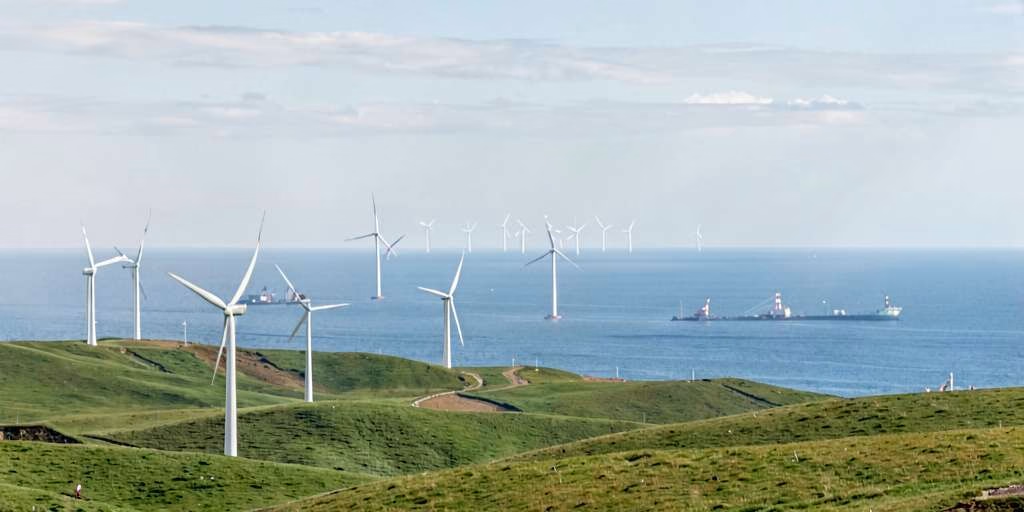
The regulatory landscape for wind turbines in the EU plays a crucial role in promoting renewable energy. These regulations guide the deployment, certification, and operation of wind farms across member states.
This article will provide an overview of key regulatory frameworks, certification processes, and various environmental and safety regulations affecting the wind energy sector in Europe. Understanding these regulations is essential for a sustainable transition to renewable energy.
- Regulatory Frameworks for Wind Turbine Deployment in Europe
- Certification Processes and Standards for Wind Turbines
- Planning and Permitting for Onshore and Offshore Wind Farms
- Environmental and Safety Regulations in the Wind Sector
- Market Access and Competition in the European Wind Industry
- Industry Innovation and Technological Development
- Job Creation and Economic Impact of Wind Energy
Regulatory Frameworks for Wind Turbine Deployment in Europe
The deployment of wind turbines in Europe is governed by a comprehensive set of regulatory frameworks that ensure compliance with environmental, safety, and operational standards.
European Commission’s Role in Wind Energy Policy
The European Commission plays a pivotal role in shaping wind energy policies across the EU. It facilitates the establishment of protocols that promote the use of renewable energy sources. Through various directives and initiatives, the Commission ensures that member states align their national policies with broader EU objectives.
Renewable Energy Directives Affecting Wind Power
Renewable Energy Directives provide essential guidance for the development of wind power projects. These regulations stipulate targets for renewable energy consumption and mandate the gradual increase of wind energy integration in national grids. Compliance with these directives is crucial for securing governmental support.
Legal Requirements for Wind Turbine Projects
Legal frameworks governing wind turbine projects dictate comprehensive assessments and clearances necessary before construction. This involves adherence to planning regulations, environmental impact assessments, and approvals from local authorities to ensure that development is executed sustainably and responsibly.
Market Incentives and Subsidy Schemes
To encourage investment, a variety of market incentives and subsidy schemes are established. These financial mechanisms aim to lower the barriers to entry for investors and developers in the wind sector. Subsidies are structured to support both onshore and offshore projects, promoting technological advances and fostering competition within the industry.
Certification Processes and Standards for Wind Turbines
The certification processes and standards for wind turbines are essential to ensure safety, efficiency, and compliance with regulatory requirements. These processes involve multiple stages to guarantee that turbines meet the necessary technical and environmental standards.
Design Certification Requirements
Before manufacturing, wind turbine designs must undergo rigorous evaluations to confirm they adhere to applicable technical specifications. This includes:
- Assessment of design documentation
- Safety analyses
- Performance simulations
Prototype Testing and Performance Verification
Prototyping is a crucial step where initial versions of turbines are tested under real-world conditions. Key activities include:
- Operational safety testing
- Verification of performance metrics
- Feedback incorporation for design optimization
Type Certification and Its Impact on Production
Once prototype tests are completed successfully, type certification is awarded. This certification not only verifies the model's compliance but also streamlines production and market entry. Benefits include:
- Enhanced trust from investors
- Boosted economic viability for manufacturers
Project-Specific Certification and Site Assessments
Each wind turbine project requires a tailored certification to evaluate site-specific factors. Essential considerations include:
- Environmental assessments
- Integration with local grids
- Compliance with regional laws
Planning and Permitting for Onshore and Offshore Wind Farms
The successful implementation of wind energy projects hinges on effective planning and permitting procedures for both onshore and offshore installations. Regulatory frameworks establish the necessary guidelines to ensure efficient project delivery while safeguarding environmental interests.
Spatial Planning Regulations for Wind Energy Installations
Spatial planning is essential to integrate wind energy installations into the landscape. Regulatory bodies dictate guidelines to assess suitable locations that minimize disruption to both local communities and ecosystems. These regulations focus on:
- Identification of priority areas for wind development.
- Consideration of existing land use, such as agriculture and urban areas.
- Coordinating with regional and local authorities for spatial coherence.
Offshore Wind Spatial Planning and Marine Protection
In offshore scenarios, spatial planning must account for marine ecosystems. Regulatory measures aim to balance energy production with marine protection. Key considerations involve:
- Mapping marine areas to avoid conflicts with fisheries and shipping routes.
- Ensuring adequate protection for marine biodiversity.
- Implementing measures to mitigate environmental impacts during construction and operation.
Permitting Procedures and Administrative Challenges
The permitting process for wind farms entails several administrative hurdles. Obtaining necessary permits can be complex and lengthy. Challenges typically include:
- Meeting multiple legal requirements across jurisdictions.
- Engaging with stakeholders and public consultations.
- Addressing potential legal objections that may arise from local communities.
Streamlining Permits to Accelerate Deployment
Efforts to streamline permitting procedures are crucial for expediting wind energy projects. Authorities are increasingly focusing on reducing bureaucratic delays through:
- Implementing one-stop-shop approaches for permit applications.
- Facilitating better communication between stakeholders.
- Utilizing digital tools to enhance transparency and efficiency.
Environmental and Safety Regulations in the Wind Sector
In the wind sector, environmental and safety regulations play a crucial role in ensuring sustainable development and operational safety. These regulations encompass comprehensive assessments and protective measures aimed at safeguarding both ecosystems and human health.
Environmental Impact Assessments for Wind Projects
Mandatory environmental impact assessments (EIAs) are a cornerstone of the regulatory framework. These evaluations assess potential effects on local ecosystems, wildlife, and community landscapes. Key aspects include:
- Identification of affected areas and species.
- Assessment of noise and visual impacts.
- Mitigation strategies for adverse effects.
Protection of Wildlife and Marine Species
Wind energy projects must adhere to strict guidelines aimed at protecting wildlife, particularly in sensitive habitats. Regulations emphasize:
- Minimizing disruption to migratory paths.
- Implementing monitoring programs to track species health.
- Adhering to conservation laws to prevent harm to endangered species.
Safety Standards for Turbine Design and Operation
Safety is paramount in turbine design and installation. Compliance with established standards ensures operational safety. Important safety measures include:
- Engineering assessments of structural integrity.
- Regular maintenance protocols for equipment.
- Emergency response plans for operational events.
Monitoring and Compliance Enforcement
Effective monitoring is essential to enforce compliance with environmental and safety regulations. Regulatory bodies conduct inspections and audits to ensure adherence. Key elements of enforcement involve:
- Regular reporting of environmental impacts.
- Surveillance of operational practices.
- Penalties for non-compliance and corrective actions.
Market Access and Competition in the European Wind Industry
The landscape for market access and competition within the European wind industry is continuously evolving. Regulatory frameworks establish criteria that enhance competitiveness while ensuring sustainable development in the market.
Rules on Subsidies and State Aid Control
Subsidies play a crucial role in supporting the wind energy sector. The EU has set clear rules concerning subsidies and state aid to prevent market distortions. Compliance with the following regulations is essential:
- Guidelines on environmental protection.
- Temporary frameworks during crises.
Regulation of Foreign Investment and Subsidies
Foreign investments are pivotal for financing wind energy projects. The EU monitors these investments to ensure they align with EU policies. Key considerations include:
- Assessment of potential impacts on local markets.
- Ensuring compliance with environmental standards.
Ensuring Fair Competition in the Wind Power Market
Maintaining a competitive environment is vital for innovation and growth. Measures include:
- Strict regulation against anti-competitive practices.
- Promotion of transparency in bidding processes.
Support Mechanisms for European Wind Industry Innovation
Innovation is driving the future of wind energy. The EU provides various support mechanisms aimed at fostering technological advancements. Focus areas include:
- Funding for research and development projects.
- Collaborations between the industry and academic institutions.
Industry Innovation and Technological Development
Innovation plays a crucial role in the advancement of wind energy technology, ensuring efficiency and sustainability within the industry.
Advances in Turbine Design and Efficiency
Recent developments in turbine design have significantly enhanced energy output and reliability. Key innovations include:
- Improved aerodynamic blade shapes for greater efficiency.
- Use of advanced materials that reduce weight and increase durability.
- Integration of smart technologies for real-time performance monitoring.
Digital Tools for Wind Farm Planning and Operation
The adoption of digital tools has transformed wind farm management. These technologies facilitate:
- Advanced modeling and simulations for site assessments.
- Data analytics for optimizing energy production.
- Remote monitoring systems that enhance maintenance strategies.
Integration of Offshore Wind into the Energy Sector
Offshore wind developments are increasingly vital to energy transition efforts. Strategies include:
- Enhanced grid connections to transmit energy efficiently.
- Collaborative projects among EU member states to establish regulatory frameworks.
Future Trends in Wind Power Technology
Looking ahead, several trends are shaping the future of wind energy:
- Increased investment in floating wind turbine technologies.
- Development of hybrid systems combining wind and other renewable sources.
- Exploration of artificial intelligence for predictive maintenance.
Job Creation and Economic Impact of Wind Energy
The wind energy sector plays a crucial role in job creation and economic development within the European Union. As this industry continues to expand, it fosters employment opportunities and stimulates regional growth.
Employment Growth Projections in the Wind Sector
Forecasts indicate a substantial increase in jobs within the wind sector. The expanding market is expected to generate hundreds of thousands of new positions across various roles, including:
- Manufacturing and installation of turbines
- Maintenance and operation of wind farms
- Research and development in renewable technologies
Regional Development Through Wind Power Investments
Investment in wind energy infrastructure significantly benefits local economies. Regions that adopt wind power initiatives experience:
- Stimulated economic activity
- Increased property tax revenues for local governments
- Enhanced opportunities for local businesses
Training and Skill Requirements for Wind Energy Jobs
As the sector grows, there is a rising demand for skilled professionals. Training programs are essential to ensure the workforce is prepared, focusing on:
- Technical skills for turbine maintenance
- Engineering expertise for design and innovation
- Environmental assessments and regulations knowledge
Socioeconomic Benefits of the European Wind Industry
The wind industry provides numerous socioeconomic advantages. Increased job opportunities lead to:
- Improved local livelihoods and income levels
- Community investments in education and health
- Promotion of sustainability and environmental stewardship
Leave a Reply