EV Charging Infrastructure EU: Current Status and Future Challenges - TEST
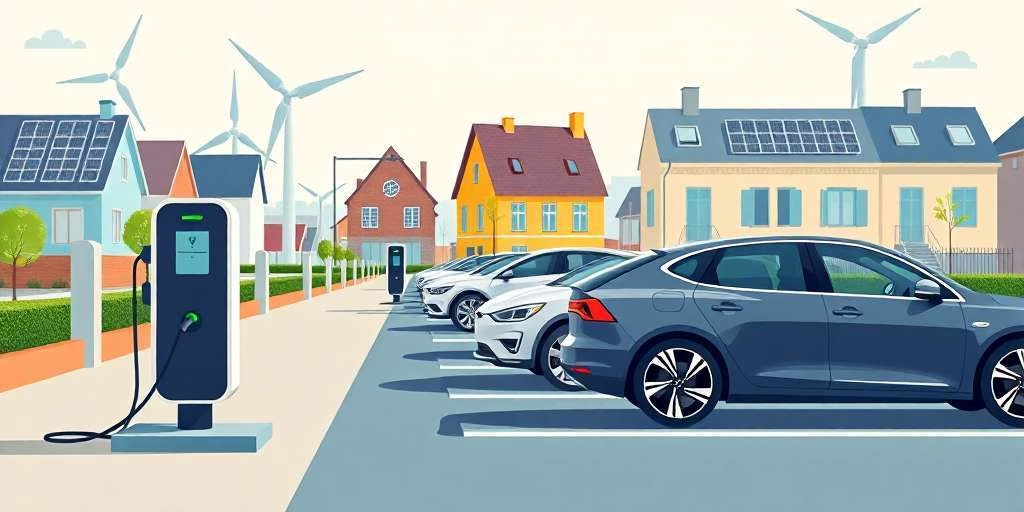
The electric vehicle (EV) charging infrastructure in the European Union is rapidly evolving. As the adoption of electric vehicles grows, so does the need for a reliable charging network across member states.
This article provides an overview of the current landscape, regulatory frameworks, market trends, and technological innovations impacting EV charging infrastructure in the EU. Understanding these elements is essential for compliance and development in the sustainability sector.
- Current Landscape of Electric Vehicle Charging Network in Europe
- Regulatory Framework and Policy Developments for Charging Infrastructure
- Market Trends and Consumer Behaviour in EV Charging
- Technological Innovations and Network Development
- Challenges in Scaling EV Charging Infrastructure
- Support Mechanisms and Stakeholder Collaboration
Current Landscape of Electric Vehicle Charging Network in Europe
The expansion of the electric vehicle charging network in Europe reflects the growing commitment to sustainable mobility. By 2026, the number of public charging points has significantly increased, signaling a shift toward greener transportation options. This infrastructure is essential for accommodating the increasing number of electric vehicles (EVs) on the road.
Germany, France, and the Netherlands are leading the charge in developing a robust EV charging network. These countries collectively host a substantial portion of the charging points available within the EU. However, challenges remain in ensuring equitable access across all member states. The disparity in charging station distribution highlights the need for cohesive European policies to promote infrastructure investment.
- Germany: Approximately 30% of all charging points in the EU are located here, popularizing the direct current (DC) fast chargers.
- France: Initiatives to roll out new charging infrastructure are underway, focusing on urban areas and highways.
- The Netherlands: This country showcases an extensive network with a high density of charging stations, enabling seamless EV travel.
In total, by the end of 2023, Europe reported over 700,000 public charging points. However, projections indicate that significant growth is still necessary to meet future demands. An estimated requirement of 8.8 million charging points by 2030 has been identified to support the increasing number of battery electric vehicles (BEVs) on European roads. This forecast underscores the urgency for rapid deployment of charging facilities.
Charging technologies vary significantly across the continent, from basic Level 2 chargers to high-powered DC fast chargers that drastically reduce charging times. Currently, the mix of available charging modes poses both opportunities and challenges. Users often encounter differences in charging speeds, compatibility, and payment options, which can impact the overall EV ownership experience.
- Standard AC chargers: Generally found in residential areas, offering convenient overnight charging.
- Fast DC chargers: Located primarily on highways, enabling quick recharges during long journeys.
- Ultra-fast chargers: Still emerging, these are essential for cross-country travel, providing power at exceptionally high rates.
The integration of various charging solutions into a cohesive network is crucial for enhancing user convenience. Interoperability between different charging networks is necessary to facilitate cross-border EV travel. As the EU progresses toward climate goals, collaboration between governments, businesses, and technology providers is essential to address these challenges and streamline the charging experience.
Innovation in this sector is supported by a clear regulatory framework and ongoing investment. The EU’s commitment to sustainability and climate action establishes a favorable environment for stakeholders to expand their operations, ensuring that the charging infrastructure can keep pace with demand. The transition towards a versatile charging ecosystem reflects the broader ambitions of the European Green Deal and the push for climate neutrality by 2050.
Regulatory Framework and Policy Developments for Charging Infrastructure
The development and deployment of the electric vehicle charging infrastructure in the European Union are significantly influenced by various regulations and policies. The objective is to create a unified and accessible charging network that not only supports the increase in electric vehicle usage but also aligns with broader environmental goals.
One of the cornerstone regulations is the Alternative Fuels Infrastructure Directive (AFID), which has been vital in establishing minimum standards and requirements for charging stations across member states. This directive aims to bolster the availability of charging points for electric vehicles, promoting interoperability and ease of access for users. Member states are mandated to implement these standards, ensuring that infrastructure is developed strategically along major transport corridors.
- Establishment of designated charging areas on motorways.
- Requirement for member states to ensure a minimum number of fast chargers within specific distances.
- A focus on increasing the number of public access charging stations, especially in urban areas.
The European Commission has also introduced new legislative proposals as part of the 'Fit for 55' package. This initiative emphasizes ambitious targets, including the objective of reducing greenhouse gas emissions by at least 55% by 2030. Achieving this goal necessitates a substantial scaling of the EV charging network to support the anticipated growth in electric vehicle ownership. The proposal includes stricter emissions targets and an accelerated timeline for implementing charging infrastructure aligned with environmental policies.
As part of the regulatory landscape, the EU has introduced funding mechanisms to support infrastructure development. The Connecting Europe Facility (CEF) and the Recovery and Resilience Facility (RRF) are instrumental in financing projects aimed at enhancing the charging network. This financial support is essential for local authorities and private investors, facilitating the necessary investments while also ensuring that regulatory requirements are met efficiently.
- Allocation of funds for the installation of chargers in under-served areas.
- Incentives for private operators to increase public access to charging stations.
- Support for research and development in innovative charging technologies.
Furthermore, policies addressing consumer access and payment interoperability have been set forth. Regulations require that charging stations accept various payment methods, making the network more user-friendly. This transparency in pricing is crucial for fostering consumer trust and encouraging more individuals to transition to electric vehicles.
The ongoing evolution of regulations ensures that public charging infrastructure is not only extensive but also sustainable and efficient. Close monitoring and compliance measures are being established to evaluate the effectiveness of these frameworks continuously. Stakeholders, including local governments, private investors, and service providers, must work collaboratively to align with these regulations while adapting to emerging technologies and consumer needs.
Market Trends and Consumer Behaviour in EV Charging
The rise of electric vehicles (EVs) in Europe has significantly influenced the market dynamics of charging infrastructure. Consumer preferences are shifting as environmental awareness and technological advancements converge. As more people embrace the lifestyle facilitated by electric mobility, the demand for accessible and efficient charging options continues to grow.
Current trends suggest that consumers are increasingly prioritizing convenience and speed in their charging experiences. The characteristics that define the modern EV user include:
- Preference for Fast Charging: There is a discernible shift towards rapid charging solutions. Many EV owners prefer chargers capable of delivering substantial power in shorter time frames, as this enhances the usability of EVs for longer journeys.
- Integration with Smart Solutions: Consumers increasingly seek charging stations that integrate with mobile apps for real-time monitoring and remote operation. Technologies that allow users to find, reserve, and pay for charging via smartphones are gaining traction.
- Sustainability Considerations: A growing segment of drivers is motivated by eco-friendliness. Many consumers actively search for charging stations powered by renewable energy sources, aligning with their values concerning sustainability and environmental impact.
Data indicates that the charging experience is a decisive factor in the adoption of electric vehicles. Surveys reveal that many potential EV buyers express concerns regarding the availability of charging points and charging speed. Therefore, service providers need to ensure robust coverage and fast service availability. The geographical distribution of charging infrastructure greatly affects consumer confidence in transitioning to electric vehicles, particularly in urban versus rural settings.
Moreover, public charging stations play a crucial role in changing consumer behavior. As more municipalities invest in EV charging networks, users are more likely to opt for electric vehicles. Various cities are implementing policies that promote charging infrastructure deployment, which fosters an environment conducive to EV usage.
In line with technological developments, consumer behavior is also impacted by the advent of user-friendly charging solutions. Innovations like portable chargers and hybrid systems that can be adapted to various vehicle types address many apprehensions consumers have regarding range anxiety. The incorporation of charging solutions suited to residential areas further extends the accessibility for everyday users.
Finally, market trends highlight the importance of public-private partnerships in enhancing charging infrastructure. Collaborations between government agencies, energy providers, and technology firms can lead to improved service offerings that meet consumer demand. These partnerships are pivotal in establishing a cohesive framework for widespread EV adoption across Europe.
Technological Innovations and Network Development
The evolution of electric vehicle (EV) charging infrastructure is significantly influenced by technological innovations and advancements in network development. These improvements not only streamline operations but also enhance user experiences, ensuring that the growing number of EVs is supported effectively.
One major trend is the integration of smart charging technology, which allows for real-time monitoring and management of charging stations. This technology enables dynamic load balancing, optimizing the distribution of energy across multiple charging points. As a result, it helps prevent overloads, especially during peak demand periods.
- Smart charging systems can adapt to fluctuations in electricity prices, encouraging users to charge when energy costs are lower.
- Users can be informed through mobile applications about the availability of charging stations, current wait times, and pricing.
Renewable energy sources also play a crucial role. The coupling of EV charging stations with solar panels or wind turbines offers a sustainable solution that aligns well with the EU's commitment to reducing carbon emissions. Businesses are increasingly investing in solar-powered charging stations as they seek to enhance their environmental credentials while also benefiting from lower operational costs.
Another significant innovation is the deployment of ultra-fast charging technology. These chargers can provide a substantial amount of energy in a short time, drastically reducing charging times for users. Many new installations feature charging capacities of over 350 kW, which can charge an EV to 80% in approximately 15-30 minutes, making electric mobility more practical for long-distance travel.
- This technology is particularly beneficial along highways and major transport corridors where quick turnarounds are essential.
- Ultra-fast chargers are increasingly equipped with multiple connectors, accommodating various vehicle types and brands.
Furthermore, developments in energy storage solutions complement the charging network expansion. Battery storage systems enable charging stations to store excess energy generated during off-peak hours or from renewable sources. This capability not only stabilizes the energy supply but also ensures that charging stations can operate independently during peak usage times or power outages.
Vehicle-to-grid (V2G) technology also shows promise in improving network efficiency. By allowing EVs to return electricity to the grid during high demand, this system supports overall grid stability and can even provide an economic incentive for EV owners.
Finally, advancements in data analytics and artificial intelligence are being deployed to enhance operational efficiency. By analyzing usage patterns and consumer behavior, operators can improve their service delivery and site planning for new charging locations. Intelligent algorithms can predict the demand for charging stations and assist in strategically placing new infrastructure to meet future needs.
Challenges in Scaling EV Charging Infrastructure
The transition to a robust electric vehicle (EV) charging network in Europe is hindered by numerous challenges that need addressing to ensure adequate growth. One of the most pressing issues is the disparity in infrastructure availability across different EU member states. While countries like Germany, the Netherlands, and France are leading in installations, many regions still face significant shortages. This uneven distribution creates accessibility issues for EV users, causing potential buyers to hesitate in making the switch to electric vehicles.
Funding and investment represent another substantial hurdle in the scaling of EV charging stations. The installation of charging points requires significant financial outlay from both public and private sectors. Governments and local agencies often struggle with budget constraints, which can delay deployment timelines. The commitment to provide subsidies or incentives to charging point operators is crucial but varies widely across Europe, leading to inconsistencies in market development.
- Lack of public funding for EV infrastructure projects.
- Difficulty in securing private investments due to uncertain returns.
- Need for collaboration between government and private sector to boost financing.
Logistics and site selection also pose major challenges. Identifying optimal locations for charging stations must consider not only the existing demand but also future growth. Geographic restrictions, zoning laws, and local regulations can impede the placement of new chargers. Furthermore, logistical challenges related to power supply and grid capacity must be addressed to ensure that installations can effectively support demand.
- Geographical limitations hinder optimal site selection.
- Local regulations may restrict new charging point installations.
- Grid capacity issues affect the availability of reliable power sources.
Technical issues also play a significant role. Many areas still rely on outdated technology that can limit the efficiency and attractiveness of using charging infrastructure. The lack of interoperability between different network operators and charging systems can complicate the user experience, discouraging potential EV owners. Establishing uniform standards and compatibility across various systems is essential for promoting consumer acceptance and trust.
Behavioral factors further complicate scaling efforts. Public perception of EV charging infrastructure varies, often influenced by a lack of awareness and understanding of the technology. Misconceptions about charging times and availability can lead to reluctance among consumers considering the switch to electric vehicles. Strategies to educate the public on the reliability and convenience of the charging network will be vital in increasing EV adoption.
- Public misconceptions about charging times and availability.
- Lack of awareness regarding the benefits of a widespread charging network.
- Need for comprehensive marketing campaigns to foster trust and acceptance.
Finally, future scalability is directly linked to success in policy implementation. Current regulations need to adapt swiftly to keep pace with technological advancements and market dynamics. If policies are too rigid or slow to evolve, they risk stifling innovation and progress within the charging network. Therefore, ongoing collaboration among policymakers, industry stakeholders, and consumers will be essential to overcome these scaling challenges.
Support Mechanisms and Stakeholder Collaboration
Effective support mechanisms are vital for the successful deployment and expansion of electric vehicle charging infrastructure. Collaboration between various stakeholders, including government bodies, private sector entities, and civil society, is essential to creating a cohesive approach that addresses investment gaps and operational challenges.
Public funding remains a crucial element in the development of charging networks. Various European funds and national grants facilitate the installation of charging stations, particularly in underserved areas. Supporting infrastructure through public-private partnerships (PPPs) can accelerate deployment, leverage private capital, and share risks across sectors.
Engagement with local authorities contributes significantly to aligning charging infrastructure with urban planning and transport policies. By coordinating with municipal regulations and zoning laws, stakeholders can ensure that the infrastructure meets community needs, facilitating better access for users.
- Collaboration with energy providers ensures that the demand for electricity is met sustainably. This partnership can lead to the integration of renewable energy sources into the charging network, enhancing the environmental benefits of electric vehicles.
- Involvement of automotive manufacturers is also noteworthy. They play a significant role in promoting the adoption of electric vehicles and can aid in developing compatible charging solutions to enhance user convenience.
- Consumer engagement is crucial to understand their needs and barriers related to charging. Feedback mechanisms, surveys, and public consultations can provide insights that help shape better services and charging options.
Some stakeholders have started to foster innovation by establishing consortiums that drive research and development efforts focused on improving charging technology. Initiatives can range from exploring faster charging solutions to enhancing user interfaces and payment systems. Such collaborative efforts not only stimulate technological advancement but also enable knowledge sharing across sectors.
Data sharing is another critical component of effective collaboration. Creating centralized databases can help identify charging patterns, locate demand hotspots, and optimize the placement of new infrastructure. This data-driven approach not only aids stakeholders but also provides valuable information for policy formulation.
Industry standards must be developed collaboratively to ensure interoperability among charging stations. By establishing common protocols, stakeholders can minimize confusion and enhance user experiences, facilitating widespread adoption of electric vehicles across regions.
Finally, the role of advocacy groups cannot be overlooked. They can act as a bridge between consumers, industry, and government entities, promoting awareness and understanding of the benefits of electric vehicle adoption and related infrastructure. Their efforts often lead to increased public support for necessary policies and funding initiatives.
Leave a Reply