Best Traceability Tools for Circular Economy Initiatives (2025 Comparison)
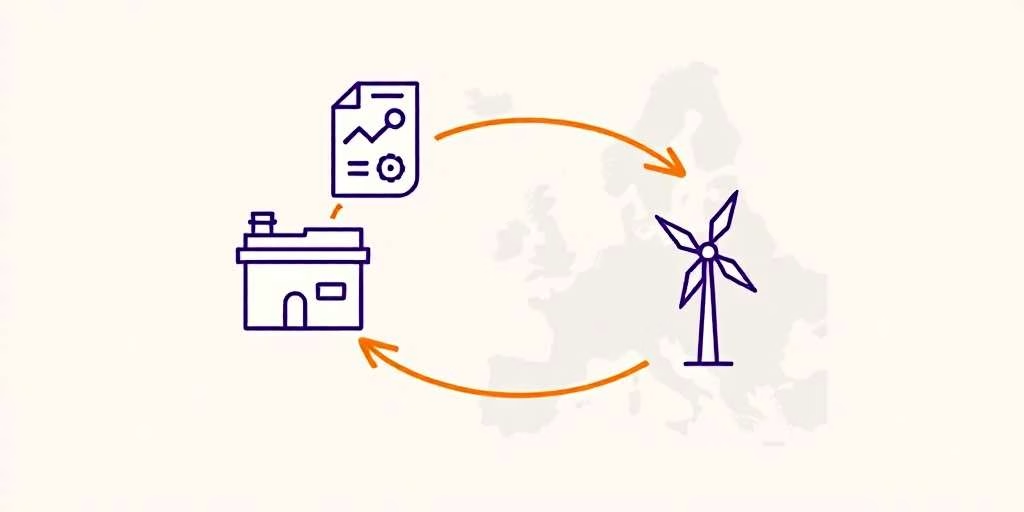
The circular economy is not just an environmental concept—it’s a fundamental redesign of business models. For it to work, you need to know where your materials are, how they move, and when they’re recycled. Traceability is the backbone of this transformation. But which tools actually deliver?
In this article, we analyze the top 5 traceability platforms for circular economy initiatives, based on real functionality, integration capabilities, cost, and scalability across company sizes.
Why Traceability Matters in the Circular Economy
The circular economy relies on three pillars: reduce, reuse, recycle. Without traceability, you cannot measure real impact. How much plastic was actually recycled? Where did the material get lost? Which suppliers meet your sustainability standards?
Traceability tools enable you to:
- Track a product’s full journey from raw material to recycling
- Validate sustainability certifications in real time
- Communicate transparency to customers and regulators
- Reduce waste and optimize inventory
Top 5 Traceability Tools for Circular Economy
IBM Food Trust
Focus: Food supply chain and circular systems.
Key Features:
- Blockchain-based recording of every product stage
- IoT integration for real-time data
- Compliance with EU and FDA regulations
Best for: Large supermarket chains, agricultural producers, and food distributors.
Cost: Custom pricing (contact required)
OriginTrail
Focus: Industrial supply chains with decentralized blockchain.
Key Features:
Open protocol for data exchange between systems
Support for recycled and reused materials
Easy API integration with ERP and management systems
Best for: Manufacturers, logistics firms, and industries with complex materials (plastics, metals, electronics).
Cost: From $10,000/year (basic plan)
VeChain
Focus: High-value product traceability with authentication.
Key Features:
- NFC and QR tags for physical tracking
- Blockchain lifecycle recording
- Integration with waste management systems
Best for: Sustainable fashion, luxury goods, recycled electronics.
Cost: From $5,000/year
GS1
Focus: Global standards for identification and traceability.
Key Features:
- GTIN and EPC for universal identification
- GS1 Digital Link (URLs on tags)
- Compliance with EU circular economy regulations
Best for: Companies already using barcodes seeking global scalability.
Cost: $500–$5,000/year based on product volume
Traceability Cloud (by Traceability Solutions Inc.)
Focus: SaaS solution for small and medium businesses.
Key Features:
- Intuitive interface—no coding required
- Pre-built templates for recycling and reuse
- Automated environmental impact reports
Best for: SMEs in agriculture, logistics, and light manufacturing.
Cost: $299/month (basic plan)
How to Choose the Right Tool
Evaluate your needs on these 4 criteria:
- Scalability: Do you need to track 100 products or 100,000?
- Integration: Does it work with your ERP or management system?
- Total cost: Does it include support, training, and updates?
- Certifications: Does it comply with ISO14001, EU CSRD, or the Circular Economy Action Plan?
Conclusion: Which Tool Is Right for You?
If you’re a large enterprise with complex chains: IBM Food Trust or OriginTrail. If you need a simple, fast solution: Traceability Cloud. If you already use barcodes: GS1. If you sell luxury or sustainable fashion: VeChain.
Ready to implement? Download our Traceability Tools for circular economy Selection Checklist—featuring 10 key questions to avoid costly mistakes.
Leave a Reply