Organic food certification Europe: A Comprehensive Guide for Consumers and Producers
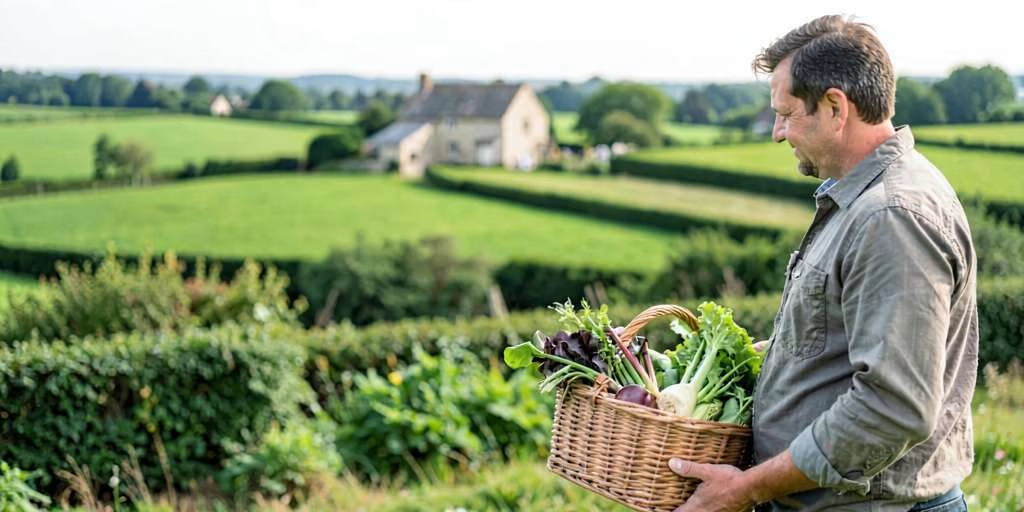
Organic food certification in Europe is essential for ensuring that food products meet specific environmental and quality standards. The certification process is governed by strict EU regulations to promote sustainable agricultural practices.
This article outlines the key aspects of organic food certification, including the regulatory framework, certification processes, and standards for various agricultural practices. It also covers innovations and support services available for those seeking certification.
- European Regulation Framework for Organic Food
- Certification Process under EU Organic Rules
- Specific Rules for Organic Agricultural Production
- Standards for Organic Animal Production
- Organic Aquaculture and Its Specific Conditions
- Processing Rules for Organic Food Products
- Import Rules for Organic Products into the European Union
- Innovations and Technological Developments in Organic Farming
- News and Updates on European Organic Food Certification
- Support and Consulting Services for Organic Certification
European Regulation Framework for Organic Food
The regulatory landscape governing organic food in Europe is primarily defined by the European Union’s commitment to sustainable farming practices. This framework aims to ensure the integrity and quality of organic products, fostering consumer confidence across the continent.
One of the pivotal regulations is the Regulation (EU) 2018/848, which came into force on January 1, 2022. This regulation is a significant update to previous laws and is designed to enhance the coherence and clarity of organic farming across EU member states.
- Promotes environmental sustainability by protecting natural ecosystems.
- Aims to improve biodiversity and animal welfare across farms.
- Ensures the clear labelling of organic products, prohibiting misleading claims.
Member states are responsible for implementing these regulations, with guidelines to manage compliance and enforcement effectively. This includes the requirement for all organic producers to be certified by recognized bodies that conduct regular inspections to maintain compliance.
The European framework also recognizes the importance of traceability in organic food production, ensuring that all products can be tracked back to their origins. This traceability is vital for maintaining standards and reinforcing consumer trust in organic brands.
Certification Process under EU Organic Rules
The certification process for organic products within the European Union is mandatory and involves several crucial steps. Each product must undergo rigorous assessment to ensure compliance with the established regulations.
To initiate the certification journey, producers need to submit an application to an accredited control body. This body is responsible for examining documentation related to their production methods and practices. Following the application, an initial evaluation takes place.
- Documentation Review: A thorough examination of submitted documents is completed.
- Initial Evaluation: The control body assesses whether the producer's operations align with organic standards.
- On-Site Inspection: Inspectors conduct a visit to the production site to verify adherence to organic practices.
After the inspection, the results are analyzed, and a decision is made regarding the issuance of the organic certificate. Successful applicants receive a certificate allowing them to market their products as organic.
Annual inspections are mandatory to maintain certification. This ensures that producers consistently comply with EU organic standards, thus preserving the integrity of organic labeling throughout the market.
Specific Rules for Organic Agricultural Production
The production of organic agricultural products in Europe is governed by strict regulations aimed at promoting sustainable practices and enhancing biodiversity. These regulations are designed to ensure that all organic farmers adhere to eco-friendly methods, thereby protecting the environment and consumer health.
Key principles must be followed by producers, including:
- Utilization of organic seeds and planting materials whenever available.
- Maintenance of soil fertility through natural processes, such as crop rotation and the use of green manures.
- Prohibition of synthetic fertilizers and pesticides, emphasizing the use of natural alternatives for pest control.
- Ensuring that livestock is fed only organic feed and is raised under conditions that allow for natural behaviors.
- Active promotion of biodiversity by integrating various plant and animal species in farming systems.
To achieve compliance, farmers must undergo regular inspections by accredited control bodies. These inspections validate adherence to the established organic standards, covering all aspects of agricultural production.
The involvement of organic farmers in continuous education and training is encouraged. This approach ensures that they stay updated on better practices and innovations that can further enhance the sustainability of their farming methods.
Standards for Organic Animal Production
Organic animal production in Europe is governed by stringent standards to ensure the wellbeing of livestock and the quality of products. The regulations establish clear guidelines that must be followed by all farmers involved in organic animal husbandry.
To qualify for organic status, all livestock must be provided with:
- 100% organic feed, ensuring no synthetic additives or GMOs are included.
- Access to outdoor areas, allowing animals to exhibit natural behaviors.
- Means for proper welfare, with emphasis on spacious living conditions.
Reproductive practices in organic farming are strictly regulated. Practices such as cloning and artificial insemination are only permitted under specific circumstances that ensure animal health and genetic diversity. Clear protocols are established for health care, emphasizing preventive measures and organic treatments.
Furthermore, the minimum standards extend to the overall management of animal rearing, promoting practices that encourage biodiversity and ecological balance. This includes rotation of pastures and integration of various species to enhance environmental sustainability.
Ensuring compliance with these standards not only upholds the integrity of organic products but also fosters consumer trust. Continuous inspections and audits are carried out to guarantee adherence to the established organic norms throughout the production cycle.
Organic Aquaculture and Its Specific Conditions
Organic aquaculture focuses on sustainable fish and seafood farming practices that adhere to strict environmental regulations. Special conditions apply to ensure that ecological integrity is maintained, and such practices do not harm local biodiversity.
To comply with organic standards, aquaculture operations must avoid the use of synthetic chemicals and genetically modified organisms. Maintaining this level of adherence is crucial for achieving certification.
- Natural feed and additives must be used, ensuring that they are sourced from organic farming practices.
- Environmental management practices are required to preserve surrounding ecosystems, notably water quality.
- Stocking densities are regulated to enhance fish welfare and limit stress among aquatic species.
- Aquaculture facilities must provide suitable living conditions, including ample space and proper aeration.
Monitoring and auditing of organic aquaculture operations are conducted regularly. This ensures compliance with the EU’s organic standards, fostering sustainable development within the aquaculture sector. As technology advances, new solutions for monitoring and traceability are emerging, enabling better management of organic aquaculture practices.
Processing Rules for Organic Food Products
Processing organic food products involves specific regulations established to ensure that the integrity of organic standards is maintained throughout the entire production chain. These rules dictate how organic ingredients must be handled, transformed, and packaged to align with the EU organic certification requirements.
Fundamental aspects of the processing rules include:
- Utilization of organic ingredients, which must constitute a minimum percentage of the final product. Products labeled as organic must contain at least 95% organic materials.
- Strict prohibition on the use of synthetic additives and preservatives. Only natural alternatives can be employed in the production process.
- Implementation of suitable processing techniques that avoid contamination with non-organic products. This includes the necessity for clear separation during production and packaging.
- Documentation proving traceability, ensuring that all processed ingredients can be traced back to their organic sources. This transparency is crucial for maintaining consumer trust.
The processing stages must be regularly monitored by accredited control bodies. These inspections help guarantee adherence to the established rules, facilitating a consistent level of quality and safety. Regular audits also aim at ensuring that companies continuously meet organic standards, promoting the integrity of the organic market.
Finally, businesses involved in processing organic food products are encouraged to stay informed about evolving regulations, which may impact their practices. Adhering to these processing rules contributes significantly to the overall credibility of the organic label.
Import Rules for Organic Products into the European Union
The import of organic products into the European Union is subject to stringent regulations to ensure that all goods meet the established EU organic standards. Only products that satisfy these conditions can enter the EU market labeled as organic.
Compliance begins with certification from an accredited body in the exporting country. Importers must present valid documentation proving that the products were produced according to the EU's organic farming regulations. This documentation includes:
- Certificates of conformity from authorized certifying agents.
- Detailed production and handling processes used in cultivation.
- Evidence that no prohibited substances were used during production.
Upon arrival, all shipments undergo thorough inspections by customs authorities to verify compliance with the EU's organic standards. Any inconsistencies or non-compliance may result in products being rejected or confiscated.
Furthermore, there are specific traceability requirements that must be adhered to. Importers need to ensure that the origin of the products is clearly stated and that all handling stages are documented.
Staying informed about updates to import regulations is vital, as the EU regularly adjusts its policies to enhance food safety and environmental sustainability. Maintaining proper records and following the latest compliance measures streamline the import process and secure market access for organic products.
Innovations and Technological Developments in Organic Farming
The landscape of organic farming in Europe is evolving rapidly, driven by innovations that enhance sustainability and productivity. New technologies are helping farmers adopt environmentally friendly practices while improving crop yields and efficiency.
Precision agriculture is becoming increasingly prominent. This approach utilizes data analytics, sensors, and GPS technology to optimize farming operations. By monitoring soil conditions and crop health in real-time, farmers can make informed decisions that reduce resource consumption.
- Drone technology is now employed for crop monitoring, allowing for aerial assessments that identify pest infestations and nutrient deficiencies earlier than traditional methods.
- Automated systems for irrigation and fertilization help in minimizing waste and ensuring that plants receive the exact amount of nutrients required.
- Biotechnology is being explored to develop natural pest control solutions that align with organic standards.
In terms of traceability, innovative software solutions are making it easier for consumers to track the origins of organic products. These technologies enhance transparency in the supply chain, assuring compliance with EU regulations.
Research into bio-based materials and sustainable inputs continues to advance organic practices further. By integrating new methodologies, organic farming can meet the challenges of climate change while ensuring the integrity of the ecosystem.
News and Updates on European Organic Food Certification
The landscape of organic food certification in Europe is continuously evolving. Recent regulatory updates reflect a commitment to sustainability and compliance with environmental standards. These changes are particularly significant for producers aiming to align with stricter EU guidelines.
Key developments include:
- The introduction of new sustainability criteria that emphasize the importance of traceability in organic farming.
- Updates to the certification processes to streamline the approval timeline for organic products.
- The implementation of stricter controls for imported organic goods, ensuring they meet EU standards.
In 2026, stakeholders have noted an increasing focus on innovative technologies aimed at enhancing the efficiency of organic farming practices. Technologies such as advanced traceability tools and digital compliance software are gaining traction, aiding farmers and producers in meeting certification requirements seamlessly.
Furthermore, educational initiatives are being expanded, providing vital resources for both new and established organic producers. Workshops and webinars are being organized to inform businesses about compliance with updated regulations.
These advancements not only support organic producers but also reassure consumers about the quality and integrity of organic products available in the market.
Support and Consulting Services for Organic Certification
Obtaining organic certification can be a complex and challenging process for producers. Support services are essential for navigating the regulatory landscape and ensuring compliance with the stringent EU standards. Various consulting firms specialize in offering tailored guidance suited to the specific needs of businesses, whether they are small farms or large enterprises.
These support services typically include:
- Assessment of current practices and identifying gaps in compliance.
- Assistance in preparing documentation required for certification.
- Training on organic farming methods and sustainable practices.
- Continuous support during the inspection process to meet certification criteria.
- Advice on maintaining compliance post-certification.
Moreover, technology solutions are increasingly being integrated into these services. Innovative tools can help producers maintain traceability throughout the supply chain, which is vital for certification. By utilizing software designed for sustainable practices, businesses can enhance their operational efficiency and ensure adherence to certification standards.
Additionally, sustainability audits offered by consulting services can help identify areas for improvement, promoting better environmental practices and facilitating easier compliance with current regulations. Staying informed about the latest requirements is crucial, and these services provide valuable insights to support ongoing success in organic production.
Leave a Reply