Organic Food Certification Requirements EU: Key Regulations and Guidelines
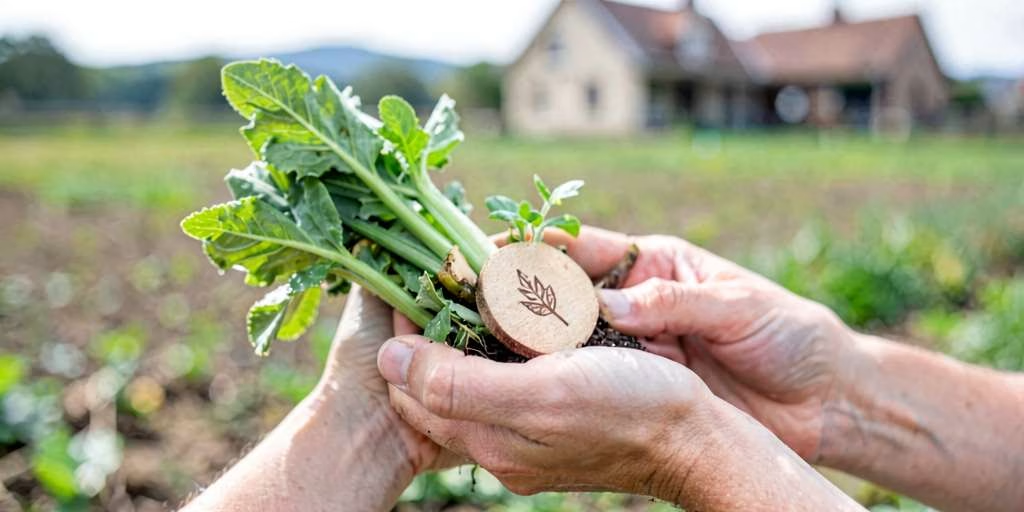
The certification of organic food within the EU is governed by strict regulations designed to ensure sustainable practices. These regulations, particularly Regulation (EU) 2018/848, outline the standards for production, processing, and labeling of organic products.
This article will provide an overview of the certification requirements, covering essential points such as organic farming conditions, the certification process, and the specific rules for permitted inputs. Understanding these guidelines is crucial for compliance in the organic sector.
- EU Regulatory Framework for Organic Food Production
- Requirements for Organic Production and Farming
- Certification Process for Organic Producers
- Inputs and Substances Allowed in Organic Agriculture
- Organic Food Processing and Labelling Requirements
- Challenges for Third-Country Organic Producers
- Sustainability and Environmental Compliance in Organic Production
- News and Updates on EU Organic Certification
EU Regulatory Framework for Organic Food Production
The regulatory guidelines for organic food production in the EU are essential for ensuring the integrity and quality of organic products in the market. The framework provides structure and clarity for producers across Europe.
Overview of Regulation (EU) 2018/848
This regulation establishes the fundamental principles governing organic production. Implemented in January 2022, it emphasizes compliance across all sectors of organic production, ensuring that all participants adhere to unified standards.
Key Changes from Previous Organic Rules
Regulation (EU) 2018/848 introduces several significant modifications, particularly in the approach to certification and compliance. The key shifts include:
- Replacing the equivalence system with a stronger compliance requirement.
- Stricter oversight of product traceability and documentation.
- Enhanced regulations on preventing contamination from non-organic substances.
Scope of Application in Agricultural and Processed Products
This regulation applies comprehensively to a variety of products, including:
- Raw agricultural goods, such as fruits and vegetables.
- Processed foods that contain organic ingredients.
- Animal products deriving from organically raised livestock.
Its broad scope ensures that all organic products meet rigorous standards, promoting consumer confidence.
Requirements for Organic Production and Farming
The certification process for organic production encompasses specific standards aimed at promoting ecological sustainability and biodiversity. Compliance with these standards is critical for maintaining organic integrity in both plant and animal farming.
Standards for Organic Plant Production
Organic plant production requires adherence to various guidelines that enhance agricultural sustainability.
Use of Plant Reproductive Material
Only certified organic seeds and plant reproductive materials should be utilized. This ensures that the propagation adheres to organic principles.
Soil Fertility and Biodiversity Management
Maintaining soil health through natural practices is essential. Farmers are encouraged to implement crop rotations, cover crops, and organic composting methods to promote biodiversity.
Prohibited Inputs and Allowed Substances
The use of synthetic pesticides, fertilizers, and genetically modified organisms (GMOs) is strictly forbidden. Organic production must rely on substances that are approved under EU regulations.
Organic Animal Farming Conditions
Organic animal farming places a strong emphasis on animal welfare and natural living conditions.
Animal Welfare and Access to Outdoor Areas
Animals must have access to outdoor spaces to ensure their well-being. This practice promotes natural behaviors and health.
Organic Feed and Prohibition of Hormones
All feed provided to organic livestock must be organic. The use of growth hormones is prohibited to maintain ethical and health standards.
Veterinary Treatments and Restrictions
Only approved veterinary treatments are allowed, focusing on preventative measures and natural remedies. Strict regulations control the use of medications to ensure compliance.
Organic Aquaculture Specific Rules
Rules for aquaculture aim to support sustainable practices in fish farming and aquatic environments.
Production and Welfare Standards
Organic aquaculture must adhere to high welfare standards, ensuring fish and other aquatic organisms are raised in balanced ecosystems.
Use of Additives and Processing in Aquaculture
Only authorized additives can be used in aquaculture production, with stringent controls on processing methods to uphold organic quality.
Certification Process for Organic Producers
Understanding the certification process is crucial for organic producers in the EU. This framework ensures compliance with the established organic standards throughout the production cycle.
Registration and Initial Audit Procedures
The journey to certification begins with registration with an accredited certification body. Producers are required to provide details about their farming practices and management systems. Following registration, an initial audit is conducted to assess adherence to the organic regulations.
Documentation and Farm Record-Keeping
Maintaining thorough documentation is essential for organic producers. This includes records of:
- Inputs used in farming
- Cultivation practices
- Animal husbandry methods
Accurate record-keeping allows for easier verification during inspections and helps ensure compliance with organic standards.
Periodic Inspections and Compliance Monitoring
Producers are subjected to periodic inspections, which can occur annually or more frequently based on risk assessment. These inspections verify ongoing compliance with organic farming practices. During these visits, documentation is reviewed, and physical conditions on the farm are evaluated.
Handling Non-Conformities and Sanctions
Non-conformities may arise during inspections. Producers must address these issues promptly to avoid sanctions. Depending on the severity, sanctions can range from corrective action plans to suspension of organic status until compliance is achieved.
Issuance and Use of the EU Organic Certificate
Once all requirements are satisfactorily met, the certification body issues the EU Organic Certificate. This certificate permits producers to market their products as organic and utilize the European organic logo, affirming their compliance with stringent EU regulations.
Inputs and Substances Allowed in Organic Agriculture
The regulation of inputs and substances in organic agriculture plays a crucial role in maintaining the integrity of organic products. Ensuring the right materials are used is essential for compliance with organic standards.
Regulation (EU) 2021/1165 on Permitted Inputs
This regulation outlines the specific inputs that are allowed in organic farming, ensuring they adhere to established organic principles. It is vital for producers to fully understand which substances can be utilized in their operations.
Fertilizers, Pesticides, and Additives Allowed
Only certain fertilizers, pesticides, and additives are permitted under organic farming guidelines. The following categories are included:
- Natural fertilizers such as compost and manure.
- Botanical pesticides derived from natural sources.
- Organic-approved additives for processing food.
Sources and Databases for Approved Inputs
Producers can refer to various databases to ensure that their inputs are compliant. Reliable sources include:
- EU regulatory websites.
- Certification bodies that approve inputs for organic production.
- Industry publications detailing compliant substances.
Ensuring Compliance of Inputs in Organic Production
Maintaining compliance requires diligent record-keeping and regular reviews of input usage. Farmers must verify that all substances used meet the EU standards for organic agriculture to prevent any non-compliance issues.
Organic Food Processing and Labelling Requirements
Proper processing and accurate labelling are crucial for ensuring that organic products meet regulatory standards. This section delves into the specific requirements related to the processing and labelling of organic food.
Separation of Organic and Non-Organic Products in Processing
To maintain the integrity of organic products, it is essential to keep organic and non-organic items separate throughout the processing stages. This includes:
- Physical separation during production to prevent cross-contamination.
- Adequate scheduling to avoid simultaneous processing of both product types.
Use of Additives and Processing Aids
Organic food processing permits only specific additives and aids. All substances used must be compliant with EU regulations. Common considerations include:
- Only approved additives that enhance product quality and safety may be used.
- Processors must verify that these substances do not compromise the organic status of the product.
Labelling Rules and Use of the EU Organic Logo
Labeling plays a vital role in consumer transparency. Products that comply with organic standards can bear the EU organic logo, which must be displayed prominently. Important aspects include:
- Clear indication of organic status on the packaging.
- Disclosure of the certifying body.
Indications and Quality Claims on Organic Products
Quality claims on organic products must be substantiated and adhere to specific EU guidelines. These claims are intended to inform consumers without misleading them. Key points involve:
- Claims must reflect the actual production methods and quality of the product.
- All statements need to be factual and verifiable.
Challenges for Third-Country Organic Producers
The transition to new EU regulatory frameworks presents significant hurdles for producers from third countries. Compliance and operational adjustments are essential for maintaining access to the European market.
Transition from Equivalence to Compliance under EU Rules
Producers no longer operate under equivalency agreements but must strictly comply with EU standards. This shift requires extensive updates to farming practices, processing protocols, and record-keeping systems to align with EU regulations.
Impact on Small-Scale and Developing Country Farmers
Small farmers in developing regions face unique challenges that often include:
- Limited access to resources and training on organic standards.
- Higher costs for compliance with EU regulations.
- Struggles in adapting cultivation methods to meet stringent requirements.
Navigating Multiple Certification Systems (e.g., USDA, Global G.A.P.)
Producers often encounter complex certification landscapes, leading to confusion and potential inefficiencies.
- Diverse standards across different systems complicate compliance.
- Additional financial burdens arise from multiple certification processes.
Trade and Market Access Implications
The evolving regulatory environment can restrict access for non-compliant producers. Market dynamics may shift significantly, impacting prices and availability of organic products from third countries.
- Increased competition with EU-based producers who can more easily adapt.
- Potential trade barriers that limit market opportunities.
Sustainability and Environmental Compliance in Organic Production
Sustainability is a fundamental aspect of organic production. It encompasses practices that not only enhance agricultural productivity but also promote environmental health. The following sections outline key practices and measures that support sustainability.
Practices Supporting Biodiversity and Soil Health
Organic farming practices are designed to promote biodiversity and restore soil fertility. Essential methods include:
- Crop rotation, which enhances nutrient cycling and disrupts pest cycles.
- Use of cover crops to prevent soil erosion and enhance soil structure.
- Implementation of organic composting methods to enrich soil organically.
These practices contribute to a resilient ecosystem, supporting a variety of plant and animal species.
Measures to Prevent Contamination with Non-Organic Substances
To maintain organic integrity, strict measures must be undertaken. Key measures include:
- Maintaining separate storage and processing facilities for organic and non-organic products.
- Conducting regular audits and inspections to ensure compliance with organic standards.
- Implementing buffer zones to reduce the risk of contamination from nearby conventional farms.
Such steps are vital to safeguard the organic certification status of the products.
Traceability and Documentation for Deforestation-Free Feed and Inputs
Transparency is critical in organic production. Effective traceability systems are necessary for trackable feed and inputs. Important components include:
- Detailed record-keeping of every input used in organic farming.
- Utilization of databases that confirm the sustainability of sourced materials.
- Regular monitoring to ensure compliance with EU regulations on deforestation.
This documentation supports both consumer confidence and regulatory compliance.
News and Updates on EU Organic Certification
The landscape of organic certification in the EU is continually evolving. Recent developments reflect the commitment to enhancing sustainability and compliance in organic production.
Recent Amendments in Organic Farming Regulations
Significant amendments have been introduced to the EU’s organic farming regulations as of 2026. These changes aim to further align organic practices with sustainable agricultural goals. Key updates include:
- Tighter limits on pesticide residues in organic products.
- Enhanced traceability requirements throughout the supply chain.
- Stricter guidelines for the labeling of organic imports.
Innovations in Organic Production and Processing Techniques
Innovative techniques are emerging within organic production methods, focusing on efficiency and sustainability. Recent advancements include:
- Use of precision agriculture technology to monitor soil health.
- Development of natural pest control methods to reduce reliance on chemical inputs.
EU Commission Initiatives for Strengthening Organic Standards
The EU Commission is proactively working on initiatives aimed at fortifying the organic standards. Current efforts involve:
- Launching educational programs for farmers on organic practices.
- Fostering collaboration with international bodies to harmonize standards.
Technology and Traceability Tools Supporting Compliance
Technological advancements play a crucial role in ensuring compliance with organic regulations. There is a growing focus on:
- Implementing blockchain technology for transparency in supply chains.
- Developing software solutions that assist producers in maintaining detailed records.
Leave a Reply