Offshore Wind Energy Compliance Germany: Key Regulations and Stakeholders
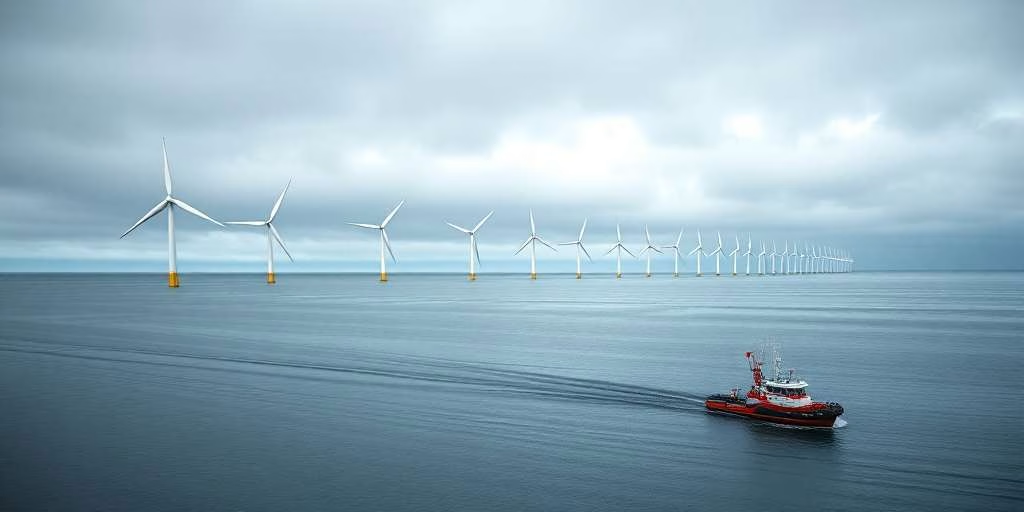
Germany's offshore wind energy sector plays a vital role in the transition to renewable energy. Compliance with regulatory frameworks is essential to ensure sustainable development while protecting marine ecosystems and promoting economic growth.
This article provides an overview of offshore wind energy compliance in Germany. It outlines key legislation, planning processes, environmental protections, and stakeholder involvement. Understanding these aspects is crucial for navigating the complexities of offshore wind energy in the country.
- Offshore Wind Energy Legal Framework in Germany
- Offshore Spatial Planning and Grid Integration
- Environmental and Species Protection Compliance
- Market Design and Offshore Tenders in Germany
- Stakeholders in Offshore Wind Compliance
- Offshore Wind Industry Expansion and Compliance Challenges
- Data, Studies, and Press in Offshore Wind Compliance
Offshore Wind Energy Legal Framework in Germany
The legal framework governing offshore wind energy in Germany is both comprehensive and multifaceted, shaped to support the rapid growth of this sector while ensuring environmental protection and regulatory compliance. Central to this framework is the Offshore Wind Energy Act, which establishes pivotal targets and outlines the processes involved in project permitting and construction.
Another significant component is the Renewable Energy Sources Act (EEG). This legislation incentivizes the expansion of renewable energy through mechanisms like feed-in tariffs, which guarantee financial stability and facilitate investments. The EEG not only promotes offshore wind energy but also integrates it into the larger energy landscape.
- Offshore Wind Energy Act: Sets benchmarks for capacity and project procedures.
- Renewable Energy Sources Act (EEG): Provides financial incentives and grid access.
- Planning Acts: Regulate maritime spatial planning, ensuring alignment with national goals.
Recent amendments have further refined the regulatory landscape, streamlining bureaucratic processes and increasing auction volumes to expedite offshore wind project deployment. These changes reflect a commitment to achieving Germany's climate goals while promoting sustainable energy practices.
Offshore Spatial Planning and Grid Integration
Effective spatial planning is vital for the successful deployment of offshore wind energy in Germany. This involves a structured approach to determining suitable locations for wind farms while considering various ecological, navigational, and safety aspects. Balancing these interests is crucial for ensuring both the sustainability of marine environments and the efficiency of energy production.
The planning process incorporates several key elements:
- Environmental Assessments: Detailed evaluations are necessary to understand the potential impact of wind projects on marine ecosystems and wildlife.
- Maritime Spatial Planning: This process allocates maritime space for offshore wind energy, considering existing maritime activities and environmental protection zones.
- Stakeholder Engagement: Collaboration among federal and state governments, local communities, and industry players is essential for developing an integrated grid strategy.
- Infrastructure Development: Adequate grid connectivity is critical, emphasizing the need for advanced transmission capabilities to support energy distribution.
The integration of offshore wind farms into Germany’s energy grid relies on coordinated efforts between multiple stakeholders, including transmission system operators. These collaborations aim to ensure that the growing capacity of offshore wind energy is effectively matched with demand across the country, thus promoting a stable energy supply. Continuous innovation in grid technology and planning strategies will further enhance the integration process, helping to address future energy challenges.
Environmental and Species Protection Compliance
Protecting the environment and preserving biodiversity are fundamental components of offshore wind energy projects in Germany. Compliance with environmental regulations is enforced through stringent laws that require comprehensive assessments prior to project approvals.
Key requirements for environmental compliance include:
- Conducting Environmental Impact Assessments (EIAs) to evaluate potential ecological effects, such as disruption to marine habitats and bird populations.
- Implementing mitigation strategies to minimize adverse impacts on local wildlife during the construction and operation of offshore wind farms.
- Adhering to EU regulations regarding habitat and species protection, ensuring that sensitive areas are identified and protected from wind energy development activities.
Detailed monitoring and reporting practices are established to track environmental impact throughout the project lifecycle. Compliance includes ensuring ongoing operations do not exceed specified environmental limits, thus safeguarding marine ecosystems.
Furthermore, collaboration with environmental organizations plays a significant role in shaping compliance standards. These collaborations encourage transparency and provide valuable insights into improving operational practices to protect species at risk.
As the regulatory landscape evolves, continuous adaptations to compliance measures will be necessary to keep pace with advancements in offshore wind technology and ecological research.
Market Design and Offshore Tenders in Germany
The market design for offshore wind energy in Germany is structured to promote competition while ensuring sustainability. A competitive auction system serves as the primary mechanism for allocating projects, requiring developers to submit bids that specify the price of electricity generation. This model aims to enhance efficiency and drive down costs, making offshore wind projects more economically viable.
Key elements of the auction process include:
- Evaluation criteria that go beyond pricing, incorporating factors such as local job creation and environmental impact mitigation.
- Regularly scheduled tenders to ensure a steady pipeline of projects, supporting the government's long-term capacity expansion goals.
- Increased auction volumes, established in recent regulatory adjustments, aimed at achieving the ambitious target of 20 gigawatts (GW) of offshore capacity by 2030.
The approach also underscores collaboration among various stakeholders, including government authorities, grid operators, and industry associations. Cooperative engagement helps alleviate potential conflicts and supports a seamless integration of new projects into the existing energy infrastructure.
These market mechanisms not only align with Germany's transition towards renewable energy but also reflect the nation's commitment to both ecological responsibility and economic growth. Stakeholders must navigate the evolving landscape of regulatory requirements while remaining competitive in international markets.
Stakeholders in Offshore Wind Compliance
The offshore wind energy landscape in Germany incorporates a diverse range of stakeholders, each playing a significant role in ensuring adherence to regulations and fostering the industry’s growth. The collaborative efforts of these entities are vital for the sector's success.
- Federal Ministry for Economic Affairs and Energy (BMWi): The BMWi is a key player in shaping the energy policy framework. Responsible for the implementation of laws, this ministry formulates strategic energy goals and evaluates the sector's regulatory landscape.
- Bundesnetzagentur (Federal Network Agency): Acting as the regulatory authority, this agency supervises compliance across the energy sector, including the auctioning processes for offshore projects. It focuses on maintaining transparency and monitoring adherence to energy supply regulations.
- Industry Associations: Organizations like the Bundesverband Offshore Windenergie (BWO) serve as advocates for industry interests. They collect insights across the sector, engage in policy advocacy, and promote best practices among offshore wind stakeholders.
- Environmental Organizations: These NGOs play a critical role in safeguarding ecological integrity during offshore developments. They emphasize compliance with environmental standards and advocate for thorough assessments of potential impacts on marine ecosystems and wildlife.
Collaboration among these stakeholders is essential to navigate the complexities of offshore wind compliance. Their combined expertise and active engagement help address emerging challenges and pave the way for sustainable energy solutions in Germany.
Offshore Wind Industry Expansion and Compliance Challenges
The growth of the offshore wind industry in Germany presents a unique set of challenges related to compliance. As the country aims to enhance its offshore wind capacity significantly, achieving planned targets requires navigating complex regulatory requirements. These regulations are in place to ensure that projects are both effective and environmentally responsible.
Compliance difficulties arise from various factors, including:
- Regulatory Changes: Frequent updates in laws can create uncertainty for developers. Staying informed about new requirements is essential to avoid delays in project approval.
- Environmental Assessments: Conducting thorough environmental impact assessments is critical. This process can be resource-intensive, requiring expertise and time to evaluate potential ecological repercussions fully.
- Spatial Planning: The need for effective maritime space allocation adds another layer of complexity. Balancing the interests of numerous stakeholders while adhering to legal frameworks is vital.
- Technology Integration: Keeping up with technological advancements enhances project efficiency but necessitates alignment with existing compliance guidelines. Incorporating innovative solutions while adhering to regulations can be challenging.
Additionally, the integration of offshore wind energy into the national grid poses its own set of compliance hurdles. Coordination between various stakeholders, including transmission operators and government entities, is critical for ensuring seamless energy distribution.
As the industry expands, continuous adaptation to evolving compliance standards will be necessary. Failure to address these challenges may hinder the acceleration of offshore wind benefits, impacting Germany's overall energy transition goals.
Data, Studies, and Press in Offshore Wind Compliance
In recent years, significant data and studies have emerged to support the development and compliance of offshore wind energy in Germany. Research has been conducted by various institutions to assess the performance, environmental impacts, and economic viability of offshore wind projects. This data serves as a foundation for policymakers and stakeholders, ensuring that developments align with legal and ecological standards.
Numerous reports published by organizations such as the German Wind Energy Association (BWE) highlight key statistics related to offshore wind capacity, investment trends, and employment impacts within the sector. These insights are vital for understanding the growth trajectory and regulatory compliance associated with offshore wind energy.
- Annual industry reports tracking capacity and installation rates.
- Studies evaluating ecological impacts and mitigation strategies.
- Press releases from the Federal Ministry for Economic Affairs concerning new regulations and compliance milestones.
Media coverage plays a crucial role in disseminating information about offshore wind compliance. Local and national news outlets frequently cover advancements, public discussions, and challenges within the sector. This serves to create awareness and foster transparency surrounding compliance issues.
By leveraging data and engaging with ongoing research, stakeholders can navigate the evolving landscape of offshore wind energy. Continuous monitoring and reporting will be essential in upholding compliance with both national and EU regulations while advancing sustainability goals in Germany.
Leave a Reply