EIA Process Overview: Key Stages and Importance in Environmental Management

The Environmental Impact Assessment (EIA) process is essential for evaluating the potential environmental effects of projects. It ensures that environmental concerns are considered before project approval. This overview outlines the key stages and components involved in the process.
Different steps, such as screening, scoping, and impact assessment, play crucial roles in determining project viability. The EIA also emphasizes public participation, legal frameworks, and various methodologies to ensure thorough evaluations.
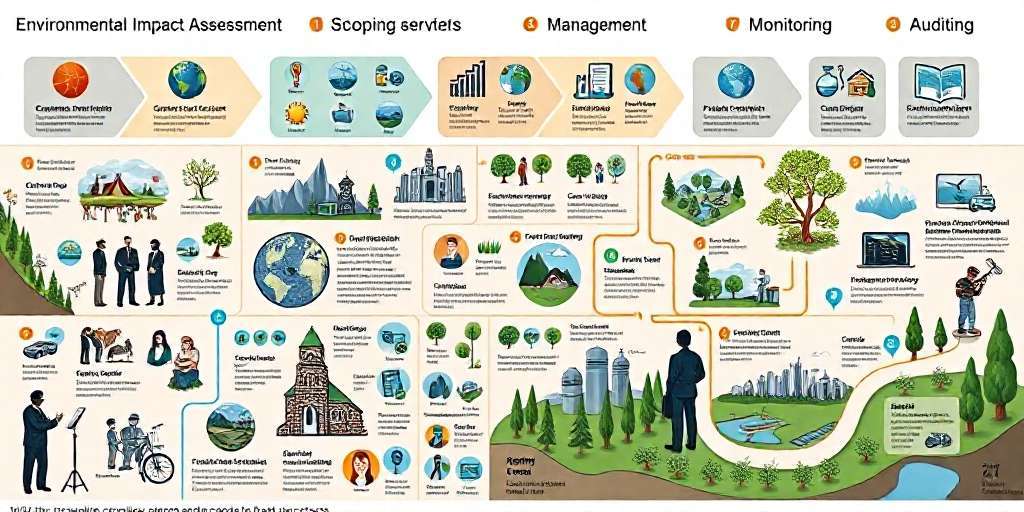
Understanding the EIA Process
This section delves into the foundational aspects of the Environmental Impact Assessment process, encompassing its definition, historical context, and the legal frameworks that guide its implementation.
Definition and Purpose
The Environmental Impact Assessment (EIA) serves as a systematic approach to evaluate the potential environmental consequences of proposed projects. By identifying, predicting, and assessing the environmental effects, the EIA ensures that decision-makers consider these impacts prior to project initiation. The primary purpose is to protect the environment while facilitating development. Through this process, it is possible to enhance project designs and promote sustainable development practices, thereby balancing economic growth and ecological preservation.
Historical Context and Evolution
The concept of EIA emerged in the 1960s and 1970s, primarily in response to growing environmental awareness and concerns regarding rapid industrial and urban development. The United States played a pivotal role in shaping EIA practices with the National Environmental Policy Act (NEPA) of 1969, which mandated environmental assessments for federally funded projects. Over the decades, many countries adopted similar frameworks, leading to international agreements that further established the importance of environmental consideration in development projects.
As societal values and scientific understanding have evolved, so too has the EIA process. Initially focused on large-scale developments, it has now expanded to encompass a wider array of projects, including those with potential cumulative effects on natural resources. This evolution reflects a growing recognition of the interconnectivity of human activities and environmental health.
Legal Framework and Guidelines
A comprehensive legal framework governs the EIA process, ensuring its consistent application and effectiveness across different jurisdictions. In Europe, the EIA Directive 2011/92/EU establishes the procedural requirements for EIA while outlining the necessary assessments for large-scale projects. This directive mandates the submission of an EIA report as part of the project approval process, facilitating informed decision-making.
In addition to European legislation, various national laws and regulations provide detailed guidelines on the implementation of EIA. These legal frameworks are designed to promote transparency, public involvement, and adherence to environmental standards. The integration of international agreements further enhances the efficacy of local laws, ensuring that the environmental impact assesment process aligns with global environmental objectives and commitments.
EIA Process Overview: Key Stages
The process involves several critical stages that contribute to a comprehensive assessment of a project's environmental impacts. Each stage plays a pivotal role in ensuring that all potential effects are considered and adequately addressed.
Screening: Determining the Need for EIA
This initial stage involves assessing whether a proposed project requires a full EIA. Factors considered include the project’s size, location, and potential for significant environmental impact. Projects likely to have adverse effects must undergo a detailed evaluation, while smaller or less impactful initiatives may be exempt from this requirement.
Scoping: Identifying Critical Environmental Issues
During the scoping phase, key environmental issues are identified to focus the assessment. Engaging with stakeholders, including local communities and experts, is essential in this stage. Their insights help pinpoint critical areas of concern that must be investigated, setting the groundwork for the subsequent assessment.
Impact Assessment: Predicting Environmental Impacts
This stage involves detailed studies to evaluate the potential environmental impacts of the project. Various methodologies are implemented to facilitate a thorough analysis.
Methodologies and Tools Used
An array of methodologies can be employed to assess impacts, including qualitative and quantitative approaches. Techniques such as checklists, matrices, and network diagrams are essential for organizing and analyzing environmental data. These tools help in visualizing the relationships between project activities and environmental factors.
Mathematical Modelling in Impact Prediction
Mathematical models are frequently utilized to predict the potential impacts of a project quantitatively. These models help simulate environmental changes and assess the significance of different project scenarios. Using advanced software tools, EIA practitioners can estimate various outcomes based on project design and operational parameters.
Mitigation Measures: Reducing Negative Impacts
Following the impact assessment, mitigation measures are proposed to reduce any identified negative effects. Strategies may involve altering project designs, implementing best practices, or establishing compensatory actions. The goal is to minimize harm and promote sustainable development throughout the project lifecycle.
Decision Making: Incorporating EIA Findings
The findings from the EIA influence decision-making processes. Stakeholders, including regulatory authorities and project developers, review the EIA report to determine project viability. Recommendations from the assessment are crucial for guiding final decisions, ensuring that environmental considerations are a fundamental aspect of project execution.
Monitoring and Management: Ensuring Compliance
This final stage emphasizes ongoing monitoring and management of environmental impacts during project implementation. An Environmental Management Plan (EMP) is often developed to outline compliance measures and performance indicators. Regular monitoring helps ensure that mitigation measures are effectively carried out and allows for necessary adjustments in response to unforeseen environmental issues.
The Role of Public Participation
Public participation is a fundamental aspect of the EIA process, ensuring that diverse voices and perspectives are considered in environmental decision-making. Engaging the public fosters transparency and helps to identify potential conflicts and concerns early on.
Involving the Public in the EIA
Effective public involvement enhances the EIA by integrating community insights and local knowledge. This process typically involves several strategies:
- Public meetings and forums to discuss project details and gather feedback.
- Workshops that facilitate dialogue between stakeholders and project proponents.
- Surveys and questionnaires to collect opinions and concerns from the community.
- Collaborative platforms that allow ongoing communication throughout the EIA.
Each of these methods encourages active participation and ensures that the perspectives of affected communities are accurately represented in the assessment.
Public Participation Benefits and Challenges
Engaging the public presents a myriad of advantages, which can include:
- Improved decision-making, as local insights can lead to more relevant and sustainable outcomes.
- Enhanced trust and credibility, fostering a positive relationship between authorities and the community.
- Identification of unforeseen issues early in the process, leading to better mitigation strategies.
However, public participation also faces several challenges:
- Limited awareness or understanding of the EIA process may hinder effective engagement.
- Potential conflicts among differing stakeholder interests can complicate discussions.
- Logistical barriers, such as timing and accessibility, may prevent some community members from participating.
Addressing these challenges is essential to maximize the benefits of public involvement.
Ensuring Transparency and Inclusivity
Transparency and inclusivity play crucial roles in fostering equity within the EIA process. Strategies to achieve these goals include:
- Providing clear and accessible information regarding the project and its potential impacts.
- Ensuring diverse representation among stakeholders, including marginalized and underrepresented groups.
- Facilitating ongoing feedback mechanisms that allow community members to voice their concerns at various stages of the process.
Ultimately, ensuring transparency and inclusivity not only benefits the affected communities but also strengthens the overall legitimacy and effectiveness of the EIA process.
Techniques and Tools for Effective EIA
Utilizing various techniques and tools is vital for enhancing the effectiveness of the Environmental Impact Assessment process. These methodologies facilitate thorough data collection and analysis, ultimately leading to informed decision-making.
Data Collection and Analysis
Gathering relevant data is a cornerstone of the EIA process. A comprehensive understanding of the environmental baseline is necessary to evaluate potential impacts of proposed projects.
Baseline Environmental Studies
Establishing baseline environmental conditions involves collecting data on flora, fauna, air and water quality, and other ecological factors prior to project implementation. This foundational information serves as a reference point against which predicted impacts can be assessed. Techniques such as site surveys, remote sensing, and geographic information systems (GIS) are commonly employed to gather this data.
Overlays and Other Analytical Techniques
Visual tools such as overlays enhance the assessment process by allowing practitioners to analyze spatial relationships between various environmental factors and project activities. These techniques can include:
- GIS Mapping: Helps visualize potential impacts by overlaying project footprints with sensitive environmental areas.
- Impact Matrices: Facilitate the identification of interactions between project components and environmental attributes.
- Scenario Analysis: Assists in predicting outcomes under different development scenarios, evaluating possible impacts and their magnitudes.
Preparing an Environmental Management Plan
An effective Environmental Management Plan (EMP) is crucial for ensuring that mitigation measures are implemented during the project lifecycle. The EMP outlines strategies for monitoring environmental impacts and compliance with regulations.
Key components of an EMP include:
- Mitigation Strategies: Detailed actions to reduce adverse effects on the environment.
- Monitoring Commitments: Procedures for ongoing assessment of environmental conditions and compliance with legal requirements.
- Stakeholder Engagement: Plans to involve affected communities and stakeholders in the monitoring process, ensuring transparency and accountability.
Challenges and Opportunities in EIA Implementation
The implementation of Environmental Impact Assessments (EIA) faces a multitude of challenges while also presenting opportunities for advancement. Addressing these issues is vital for enhancing the effectiveness of EIAs and ensuring their integration into sustainable development practices.
Common Challenges Faced
Many factors contribute to the difficulties encountered during EIA implementation. Some of the most prevalent challenges include:
- Lack of Resources: Limited funding and inadequate personnel often hinder thorough assessments.
- Poor Coordination: The absence of effective communication among stakeholders can complicate the process, resulting in fragmented assessments.
- Insufficient Public Participation: Many EIAs fail to adequately involve the public, limiting input and undermining community trust.
- Regulatory Inconsistencies: Variations in legal requirements across jurisdictions can create confusion and complicate compliance.
- Technical Limitations: A lack of access to advanced methodologies and technological tools can impede the predictive accuracy of assessments.
Opportunities for Improvement and Innovation
Despite the aforementioned challenges, there are significant opportunities to enhance the EIA process. Innovations can drive more efficient, effective assessments:
- Integration of Technology: Employing digital tools and data analytics can streamline data collection and facilitate real-time monitoring.
- Enhanced Training Programs: Providing comprehensive training can improve the skills of professionals involved in EIA, ensuring greater consistency and expertise.
- Collaboration with Stakeholders: Building stronger partnerships among governmental agencies, local communities, and NGOs can improve transparency and foster collective problem-solving.
- Adopting Ecosystem-Based Approaches: Shifting towards a holistic view that considers ecosystem services can enhance the predictive capabilities of assessments.
The Future of Environmental Impact Assessments
The landscape of Environmental Impact Assessments is constantly evolving, influenced by both environmental pressures and societal expectations. As global awareness of environmental issues increases, the demand for more robust EIA processes will likely grow. Emphasizing sustainability and resilience will be central to the future of EIAs, pushing for adaptive frameworks that respond effectively to emergent challenges.
The integration of climate change considerations into the EIA will also become paramount. Ensuring that projects can withstand environmental changes will necessitate innovative approaches in assessment methodologies. Continuous feedback loops from implemented projects will inform and refine future EIA practices, promoting a culture of learning and adaptation in environmental governance.
EIA Case Studies
Case studies provide valuable insights into the practical application of Environmental Impact Assessments (EIA). They illustrate the successes and challenges faced during various project implementations.
Successful EIA Implementations
Several projects have exemplified effective EIA practices, demonstrating the benefits of thorough environmental evaluations. These successful implementations often showcase how stakeholder engagement and innovative mitigation strategies lead to sustainable outcomes.
- Wind Farm Development: A prominent case involved a large offshore wind farm where the EIA process facilitated extensive consultations with local communities and environmental experts. The project adapted its design based on feedback, significantly reducing potential impacts on local wildlife.
- Highway Expansion Project: Another example can be seen in a highway expansion in Bavaria. The EIA identified critical areas required for wildlife corridors. As a result, the project included habitat restoration plans, ensuring that ecological connectivity was maintained.
- Urban Development Initiative: In Berlin, a mixed-use urban development successfully integrated environmental assessments with public input. The EIA process led to the incorporation of green spaces and sustainable building practices, enhancing urban biodiversity while meeting community needs.
Lessons Learned from Past Projects
We would like to finish this EIA process overview mentioning how analyzing past EIA projects helps identify common challenges and opportunities for improvement. Each case serves as a learning tool for future assessments, highlighting essential practices that can be enhanced.
- Importance of Early Engagement: Early stakeholder involvement has proven to be crucial. Projects that incorporated public feedback from the beginning often faced fewer disputes during later stages, demonstrating the value of transparency.
- Need for Robust Data Collection: Several cases revealed that inadequate baseline data can lead to underestimating potential impacts. Ensuring comprehensive environmental data collection at the outset improves the accuracy of impact predictions and strengthens the EIA process.
- Adapting to Regulatory Changes: Projects have faced delays due to shifts in regulatory requirements. Proactive engagement with regulatory bodies ensures that assessments meet evolving expectations, reducing the likelihood of project halts.
Leave a Reply