EU Environmental Regulations Guide: Key Insights for Businesses in Germany
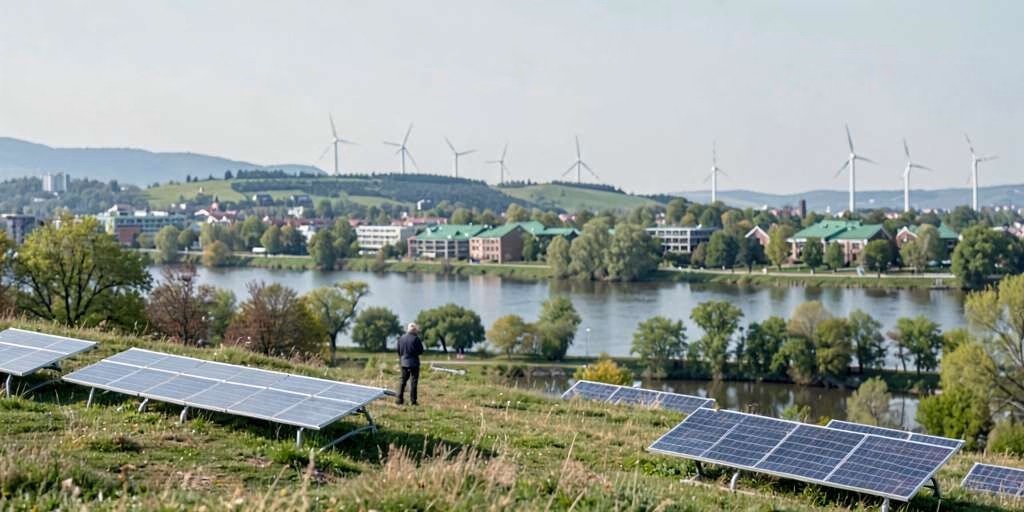
The EU Environmental Regulations Guide provides essential information on the complex framework governing environmental policies in the European Union. It covers various directives and regulations aimed at promoting sustainability and addressing climate change.
This guide serves as a resource for businesses navigating compliance requirements, from the European Green Deal to specific regulations like REACH and deforestation laws. Understanding these regulations is critical for achieving environmental and economic goals in Germany and across Europe.
- EU Environmental Policy Framework
- Climate Change and Emissions Reduction Policies
- Circular Economy and Resource Efficiency
- Chemicals Regulation and Safety Standards
- Biodiversity and Nature Protection Policies
- Deforestation Law Compliance and Supply Chain Management
- Monitoring, Reporting, and Enforcement Mechanisms
- Health, Safety, and Social Considerations in Environmental Policies
- Water Management and Pollution Control
- Future Trends and Policy Developments in EU Environmental Law
EU Environmental Policy Framework
The EU Environmental Policy Framework comprises essential elements that guide the development and implementation of environmental regulations across member states. These policies aim to address pressing environmental challenges and promote a sustainable future for Europe.
The European Green Deal and Its Strategic Aims
The European Green Deal serves as a foundational document outlining the EU's commitment to tackling climate change and fostering a sustainable economy. It sets the ambitious goal of achieving climate neutrality by 2050, alongside strategies to:
- Reduce greenhouse gas emissions significantly
- Promote renewable energy sources
- Support sustainable transportation and mobility
- Protect biodiversity and ecosystems
- Transform industries for a circular economy
This comprehensive approach not only targets emissions reduction but also focuses on enhancing the quality of life for European citizens. The Green Deal encourages a collaborative effort involving governments, businesses, and civil society to ensure its successful execution.
Key Environmental Directives and Regulations
The EU has enacted several vital directives and regulations that framework environmental protection efforts. Notable among these are:
- REACH: This regulation governs the registration, evaluation, authorization, and restriction of chemical substances, placing the burden of proof on industries to demonstrate the safety of their chemicals.
- Waste Framework Directive: Establishes a legal basis for waste management in the EU, emphasizing the need for reducing waste and promoting recycling.
- Air Quality Directive: Focuses on maintaining and improving air quality across the Union, setting standards for pollutants that affect public health and the environment.
- Water Framework Directive: Aims to ensure the sustainable use of water resources, enforcing stringent guidelines for the protection of water quality.
These regulations are essential for creating a cohesive legal landscape that supports environmental sustainability while balancing economic growth.
Role of the European Commission in Environmental Governance
The European Commission plays a crucial role in the governance of environmental policy within the EU. Acting as the executive arm, it oversees the implementation of environmental legislation, ensuring compliance among member states. Its functions include:
- Proposing new environmental laws and directives
- Monitoring the enforcement of existing regulations
- Public consultation and engaging with stakeholders for policy development
- Providing financial and technical support to assist member states in meeting their environmental goals
Through these roles, the European Commission seeks to foster collaboration and facilitate a unified approach to environmental governance across Europe.
Climate Change and Emissions Reduction Policies
Addressing climate change is a cornerstone of the EU's environmental agenda. Through various measures, the EU aims to reduce greenhouse gas emissions, enhance resilience, and foster sustainable development.
Greenhouse Gas Emissions Targets for Member States
The EU has established specific targets for greenhouse gas emissions that each member state must adhere to. These targets are integral to achieving the overall goals of climate neutrality by 2050. Member states are expected to formulate national plans to reduce emissions in line with these commitments. Key elements of these targets include:
- Setting legally binding national emissions reduction targets.
- Promoting energy efficiency and renewable energy sources.
- Encouraging investments in sustainable technologies.
The Fit for 55 Package: Goals and Implementation
This legislative package aims to ensure that the EU achieves a minimum of 55% reduction in greenhouse gas emissions by 2030 compared to 1990 levels. It constitutes a significant overhaul of existing legislation and introduces:
- Stricter emissions targets across various sectors.
- Enhanced regulations for the Emission Trading System (ETS).
- Incentives for renewable energy and decarbonization of industries.
The effective implementation of the Fit for 55 package is crucial for meeting the EU's long-term sustainability objectives.
Emissions Trading System and Its Impact
The EU Emissions Trading System (ETS) is a key instrument designed to reduce greenhouse gas emissions by allocating emissions allowances to various sectors. Each company must submit an allowance for every ton of CO2 it emits.
The impact of the ETS includes:
- Creating a market for carbon pricing, which encourages companies to reduce emissions.
- Driving investment in low-carbon technologies.
- Fostering competition in the development of cleaner energy solutions.
Energy Climate Change Policies and Renewable Energy Integration
Energy-related policies play a significant role in the EU's climate agenda. The integration of renewable energy sources into the energy mix is a primary focus. To facilitate this transition, the following strategies are implemented:
- Setting ambitious targets for renewable energy use across member states.
- Supporting innovation in clean energy technologies.
- Implementing subsidies and financial incentives to promote renewable projects.
These approaches aim to create a more sustainable and resilient energy landscape while contributing to overall emissions reduction goals.
Circular Economy and Resource Efficiency
This section explores the initiatives and strategies implemented within the EU to foster a circular economy and enhance resource efficiency, supporting sustainability goals across the region.
Circular Economy Action Plan and Its Key Measures
The Circular Economy Action Plan lays the groundwork for the EU's ambitious aim to transition towards a circular economic model. This plan emphasizes:
- Promoting product longevity and reparability.
- Encouraging sustainable production methods.
- Reducing waste generation through innovative design.
By addressing the entire lifecycle of products, the plan significantly contributes to reducing environmental impacts and utilizes resources more effectively.
Waste and Recycling Management Strategies
Managing waste effectively is crucial for achieving a circular economy. EU policies focus on:
- Implementing waste reduction measures at the source.
- Enhancing recycling technologies and practices.
- Fostering public awareness on recycling.
These strategies are designed to facilitate the diversion of waste from landfills and promote a culture of recycling, ultimately leading to more sustainable waste management solutions.
Resource Efficiency in Raw Materials and Production
Resource efficiency plays a central role in enhancing production processes. The EU encourages industries to:
- Optimize the use of raw materials.
- Implement energy-efficient technologies.
- Develop methods for minimizing resource consumption.
This shift not only reduces environmental impact but also potentially lowers production costs and enhances competitiveness in the marketplace.
Sustainable Use of Critical Raw Materials
Ensuring the sustainable use of critical raw materials is vital for the EU's economic and environmental objectives. Strategies in this area include:
- Identifying alternative materials to reduce dependency.
- Promoting recycling and recovery of critical materials.
- Encouraging responsible sourcing practices.
By prioritizing these actions, the EU aims to secure its supply chains while minimizing the ecological footprint associated with resource extraction and utilization.
Chemicals Regulation and Safety Standards
The regulation of chemicals within the European Union is designed to safeguard both human health and the environment. These regulations ensure that chemical substances are managed responsibly and that safety measures are rigorously implemented across all sectors.
REACH: Registration, Evaluation, Authorisation, and Restriction
REACH represents a significant legislative framework for controlling chemical substances within the EU. This regulation mandates that all manufacturers and importers of chemicals in Europe must register their substances with the European Chemicals Agency (ECHA). The registration process requires comprehensive data on the properties, hazards, and uses of chemicals.
Evaluation processes enable authorities to assess the information submitted, ensuring compliance with safety standards. Furthermore, substances that pose a serious risk to human health or the environment may be subject to authorisation or restriction, allowing for better control of hazardous chemicals used in various industries.
Precautionary Principle and Its Application
An essential aspect of EU chemical regulations is the precautionary principle. This guiding framework underscores the importance of taking preventive action in the face of uncertainty regarding potential risks. It directs stakeholders to prioritize health and environmental protection when assessing new chemical products or processes.
- Potential impacts on biodiversity
- Human health considerations
- Environmental safety assessments
The application of this principle promotes a proactive approach, ensuring that chemicals that may have adverse effects are scrutinized carefully before being approved for market use.
Environmental and Human Health Protection Measures
The EU's commitment to protecting human health and the environment is embodied in a variety of measures outlined in its chemical regulations. Stringent testing and assessment protocols are implemented to evaluate substances meticulously. These measures include:
- Regular monitoring of chemical exposure levels
- Risk assessment frameworks that guide regulatory decisions
- Public availability of safety data sheets
By mandating clear labelling and safety protocols, the EU ensures that companies operate transparently, enabling consumers to make informed choices about the products they use. Ongoing revisions of regulations aim to incorporate advancements in science and technology for more effective protection.
Biodiversity and Nature Protection Policies
The European Union places significant emphasis on protecting biodiversity and fostering nature conservation as a pillar of its environmental policies. Robust strategies and initiatives are in place to safeguard the rich ecosystems present across member states.
European Biodiversity Strategy for 2030
This strategy outlines the EU's commitment to reversing the decline of biodiversity within its borders. The aim is to ensure that biodiversity is sufficiently protected and restored through a variety of measures. This includes:
- Setting legally binding targets for the restoration of natural habitats.
- Enhancing the integration of biodiversity across all policy areas.
- Strengthening the role of the EU in global biodiversity initiatives.
Protected Areas and Restoration Initiatives
Protected areas are essential for preserving the ecological balance and ensuring the survival of vulnerable species. The EU's guidelines support the designation of these areas, emphasizing:
- The creation of new protected zones to increase the EU's network of natural sites.
- Implementing restoration initiatives that focus on degraded ecosystems, aiming for a sustainable recovery.
Policies Addressing Soil, Water, and Air Quality
Integrating policies that target the conservation of soil, water, and air quality is critical for maintaining biodiversity. Effective regulations are designed to mitigate pollution and enhance ecosystem resilience. These policies often include:
- Measures for protecting freshwater habitats and ensuring sustainable water usage.
- Protocols aimed at reducing air emissions to combat climate change effects on biodiversity.
- Strategies for maintaining soil health and preventing erosion.
Environmental Impact Assessment Requirements
The implementation of Environmental Impact Assessments (EIA) is mandated within the EU to evaluate the potential effects of projects on biodiversity. This procedure plays a fundamental role in decision-making processes. Key requirements involve:
- Thorough assessments of potential impacts prior to project commencement.
- Public participation and transparency in the assessment process.
- Continual monitoring of biodiversity indicators post-implementation.
Deforestation Law Compliance and Supply Chain Management
Ensuring compliance with deforestation regulations and effectively managing supply chains is vital for businesses engaged in agriculture and forestry. Understanding the legal framework and adopting best practices can aid in achieving sustainability objectives.
Legal Framework on Deforestation-Free Products
The legal landscape surrounding deforestation-free products emphasizes the need for stringent compliance. The EU has established clear requirements for various industries to assure that their products are sourced responsibly. Legislation focuses on integrating sustainability into the supply chain by prohibiting the use of products linked to deforestation. This regulation means that companies must verify the origin of their raw materials and ensure they are not contributing to forest loss.
Traceability Tools and Certification Systems
Traceability is a cornerstone for ensuring compliance with deforestation laws. Businesses are increasingly adopting advanced tools and technologies that enable them to track their supply chains efficiently. Certification systems such as the Forest Stewardship Council (FSC) and the Programme for the Endorsement of Forest Certification (PEFC) are pivotal in this context. These systems assist companies in validating their sustainable sourcing practices. By utilizing traceability tools, organizations can enhance transparency and demonstrate their commitment to responsible forestry practices.
Sustainability Audits and Consulting Services for Compliance
Conducting sustainability audits is a critical step for organizations aiming to meet deforestation compliance standards. These audits assess current practices and highlight areas for improvement in sourcing and operational processes. Consulting services are available to guide businesses through compliance challenges, offering tailored solutions that align with regulations and sustainability goals. Experts in this field can provide insights into best practices and help create action plans that facilitate adherence to legal standards.
Role of Businesses in Implementing Deforestation Regulations
Businesses play a pivotal role in the implementation of deforestation regulations. By adopting responsible sourcing policies, companies can mitigate environmental impact and fulfill regulatory obligations. This involves integrating sustainability into corporate strategies and ensuring employee training on environmental compliance. Collaborative efforts among supply chain partners can reinforce commitments to sustainability. Organizations are encouraged to actively participate in initiatives that promote reforestation and conservation efforts, further contributing to environmental protection.
Monitoring, Reporting, and Enforcement Mechanisms
Monitoring, reporting, and enforcement mechanisms play a crucial role in ensuring compliance with environmental regulations across the EU. These systems help assess the effectiveness of policies and can identify areas for improvement in regulatory frameworks.
Environmental Performance Indicators and Assessments
To gauge the success of environmental policies, various performance indicators are established. These indicators serve as quantifiable measures for assessing progress and compliance with set objectives. Commonly used indicators include:
- Greenhouse gas emissions reduction rates.
- Efficiency in resource usage.
- Recycling and waste management effectiveness.
- Biodiversity conservation metrics.
Regular assessments based on these indicators enable the EU to track progress and make informed decisions regarding environmental policies.
Corporate Sustainability Reporting Obligations
Businesses operating within the EU are required to adhere to stringent sustainability reporting obligations. This includes disclosing their environmental impacts and compliance with applicable regulations. Key elements of these obligations consist of:
- Annual sustainability reports highlighting environmental performance.
- Compliance with the EU Non-Financial Reporting Directive.
- Transparency in supply chain practices.
Such reporting enhances corporate accountability and encourages continuous improvement in environmental practices.
Implementation and Enforcement Challenges Across Member States
The effective implementation of environmental regulations faces challenges that vary among EU member states. Issues may include lack of resources, varying levels of commitment, and differing interpretations of compliance requirements. Noteworthy challenges include:
- Inconsistent enforcement of existing laws.
- Delays in reporting and data collection.
- Limited public access to environmental performance data.
These discrepancies can undermine the overall effectiveness of the EU's environmental framework.
The Role of Environmental NGOs and Civil Society in Oversight
Environmental non-governmental organizations (NGOs) and civil society groups are integral to the oversight of environmental compliance. Their involvement includes monitoring corporate practices and advocating for stronger enforcement of regulations. Key roles played by these organizations are:
- Conducting independent audits of environmental performance.
- Engaging in public awareness campaigns related to environmental issues.
- Providing a platform for affected communities to voice their concerns.
Through their active engagement, these stakeholders help ensure that businesses and governments remain accountable for their environmental commitments.
This section addresses the vital intersection of health, safety, and social factors within the framework of environmental regulations. The impact of environmental policies on public health and community well-being is profound, influencing both governance and corporate practices.
Human Health and Environmental Linkages in EU Law
The connection between human health and environmental quality is a critical aspect of EU legislation. Various directives and regulations aim to mitigate health risks associated with pollution, unsafe chemicals, and inadequate waste management. Legislative frameworks emphasize the importance of ensuring that environmental standards protect not only ecosystems but also public health. Policies such as the REACH regulation are designed to evaluate the safety of chemicals, thereby safeguarding human health by preventing exposure to harmful substances.
Rights and Environmental Due Diligence Requirements
Recognizing environmental rights as fundamental, the EU mandates that businesses and governments adhere to due diligence requirements that consider the social and environmental impacts of their operations. These obligations encourage organizations to assess potential negative effects on communities and ecosystems proactively. Compliance with these rights must involve:
- Conducting environmental impact assessments (EIA)
- Engaging stakeholders in dialogue
- Implementing corrective measures when necessary
This proactive approach not only protects rights holders but also enhances corporate transparency and accountability, fostering a culture of sustainability.
Social and Environmental Impact Assessment Integration
Integrating social and environmental impact assessments into project planning is essential for achieving sustainability. These assessments enable companies to evaluate the broader implications of their activities on communities and environmental systems. By incorporating social dimensions, such as community health and welfare, organizations can identify potential conflicts and mitigate adverse effects early in the planning process. A well-rounded assessment process can include:
- Evaluating community health indicators
- Understanding demographic factors affecting vulnerability
- Assessing potential disruptions to local ecosystems
Such integration ensures that environmental policies are not only effective but also equitable, addressing the needs and rights of affected populations.
Water Management and Pollution Control
Effective water management and pollution control are vital for ensuring healthy ecosystems and safeguarding public health across Europe. The EU has established a robust framework to regulate the protection and quality of water resources.
Framework Directive on Water Protection
The Water Framework Directive (WFD) serves as the cornerstone of EU water policy. It aims to achieve "good status" for all water bodies throughout Europe. This directive incorporates a systematic approach, emphasizing the need for integrated water management.
- It mandates member states to develop river basin management plans to ensure sustainable use of water resources.
- Regular assessments of water quality and ecological status are required, promoting accountability and transparency.
- The directive also advocates for public participation in water management decisions, enhancing community involvement and awareness.
Policies for Protection of Water Resources and Quality
To protect water resources, a range of policies and regulations have been implemented. These initiatives focus on preventing pollution at its source and promoting sustainable practices.
- Pollution control measures target point-source and diffuse pollution, emphasizing the need to monitor agricultural runoff and industrial discharges.
- Member states are encouraged to adopt integrated catchment management strategies that consider the interconnectedness of land use, water quality, and biodiversity.
- Investments in infrastructure for clean water and wastewater treatment facilities are prioritized to meet the established quality goals.
Environmental Standards for Wastewater Treatment
Wastewater treatment is crucial for preserving water quality and public health. The EU has set specific environmental standards to govern wastewater management.
- These standards dictate the acceptable levels of pollutants allowed in treated wastewater, ensuring it is safe for discharge into water bodies.
- Regular monitoring and reporting obligations are imposed on wastewater treatment facilities to guarantee compliance with quality requirements.
- Advanced technologies are encouraged for upgrading treatment processes. This aims to enhance efficiency and reduce the environmental impact of wastewater disposal.
Future Trends and Policy Developments in EU Environmental Law
The evolving landscape of EU environmental law is marked by ambitious targets and innovative strategies aimed at fostering sustainable development. With a focus on climate resilience and ecological integrity, the EU is setting the pace for future regulatory frameworks.
Ambitions for 2030 and Beyond within the Green Deal
The European Green Deal outlines substantial objectives for 2030, aiming to achieve a significant reduction in greenhouse gas emissions. Central to this vision is the commitment to:
- Reach at least a 55% reduction in emissions compared to 1990 levels.
- Transition to renewable energy sources to fulfill at least 32% of the EU's energy needs.
- Enhance energy efficiency, targeting a 32.5% improvement by 2030.
These goals guide the EU in rethinking its economic framework, prioritizing sustainable initiatives and minimising environmental impacts, with the intention of becoming climate-neutral by 2050.
Emerging Technologies and Innovation for Sustainability
Technological advancements play a pivotal role in achieving environmental objectives. Innovation is crucial in areas such as:
- Renewable energy technologies, including solar, wind, and hydrogen.
- Circular economy solutions, where waste is viewed as a resource.
- Smart agriculture technologies that reduce resource consumption.
The EU actively promotes research and development initiatives, fostering collaboration between businesses, academia, and governments to drive sustainable innovations forward.
EU Strategies for Adaptation to Climate Change
With the rising risks associated with climate change, the EU is prioritizing adaptation strategies. This includes:
- Enhancing resilience in infrastructure to withstand extreme weather events.
- Implementing measures for sustainable water and land management.
- Investing in ecosystem-based approaches to bolster biodiversity.
Such strategies are crucial for preparing both urban and rural areas for the impacts of climate change. Through effective planning and community involvement, the EU strives to safeguard natural resources while promoting sustainable growth.
Leave a Reply